
Factory Inspection and Testing of a Heat Exchanger Made in China: What to Witness and What to Ask For
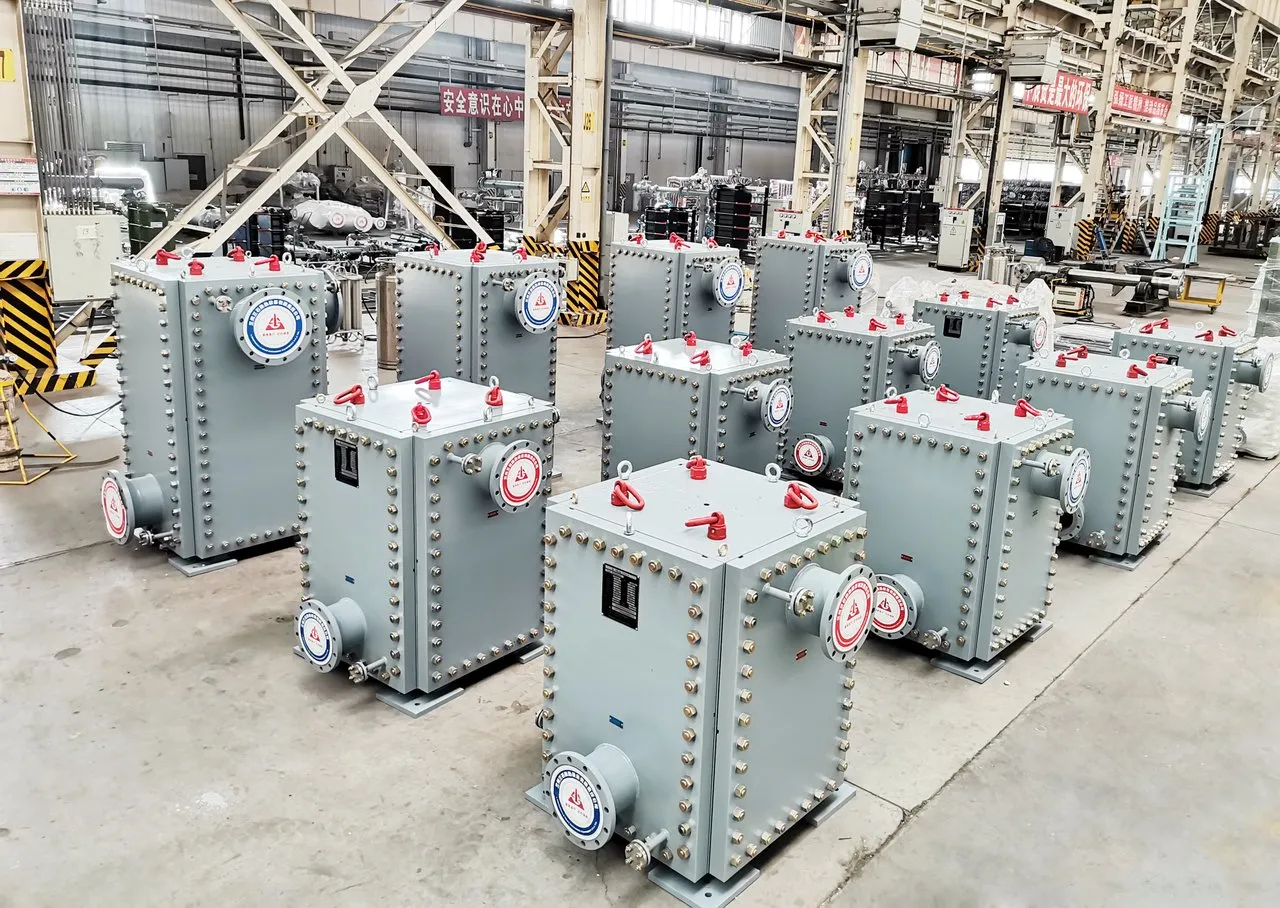
The factory is the last place where a problem with a heat exchanger can be found and fixed cheaply. Once the unit is crated, shipped and installed, a wrong flange rating, an untraceable plate material or a weak weld costs weeks and a site repair. Yet many buyers see their heat exchanger for the first time when it arrives on site.
This guide explains how to plan the inspection of a heat exchanger built in China: which points to witness, which tests apply to plate and shell-and-tube units, what a factory test can and cannot prove, which documents to collect before shipment, and how to witness tests when you cannot travel. It complements the inspection steps in our lead time guide and the preservation and packing steps in our shipping guide.
A note on terms: for a static heat exchanger, the "factory acceptance test" (FAT) is mainly the pressure test, the visual and dimensional check and the document review. A packaged unit with pumps, valves and a control panel also needs a functional test, covered in section 7.
1. Agree the Inspection and Test Plan With the Order
The inspection and test plan (ITP) lists every manufacturing and test step in order, with the procedure or standard it follows, the acceptance criteria, the record it produces, and the role of each party. Each step is marked with a code:
- H (hold point): work stops until the buyer's inspector has witnessed the step or waived it in writing. The hydrostatic test is the usual hold point.
- W (witness point): the buyer is invited, but work may continue if the inspector does not come after proper notice.
- R (review): the buyer reviews the record, such as a material certificate or an NDT report, without attending.
Agree the ITP when the order is placed, not when the unit is nearly finished. Write down the notice period for each hold and witness point (several working days is common, longer if your inspector travels from abroad), who pays if an inspection has to be repeated because the unit was not ready, and how a waived point is confirmed. The petrochemical supplier checklist lists what a full ITP usually covers.
Code inspection comes on top of your own: a unit built to the ASME code is inspected by an Authorized Inspector, and a unit under the European Pressure Equipment Directive by a notified body for every category above the lowest. Their visits should be scheduled together with yours.
2. Materials: Certificates and Traceability
Most problems with heat exchanger materials are problems of traceability. Check that:
- Every pressure part has a certificate. For plates, tubes, shell plate, forgings and tubesheets, ask for mill certificates to EN 10204. A type 3.1 certificate is issued by the manufacturer's inspection department, independent of production; a type 3.2 certificate is also verified by the purchaser's or an independent inspector.
- The heat number on the certificate matches the marking on the material. Ask for a traceability map that shows which heat went into which part.
- Alloy grades are confirmed where they matter. For stainless steel, duplex, nickel alloys and titanium, ask for positive material identification (PMI) of plates, tubes and welds with a portable analyzer, at least on a sample.
- Plate thickness and grade are what you ordered. For plate heat exchangers, check the plate material and thickness against the datasheet.
- Gasket material is certified. The compound, such as NBR, EPDM or FKM, should match the specification. Our gasket material guide explains the differences.
3. Welding and Non-Destructive Testing
Shell-and-tube, welded plate and plate-and-shell heat exchangers depend on their welds. Before production starts, review:
- Welding procedures and welder qualifications. Each welding procedure specification (WPS) should be supported by a procedure qualification record (PQR) under the code of the unit: ASME Section IX for ASME work, ISO 15614 for European work, NB/T 47014 for Chinese pressure equipment. Welders must be qualified for the processes and positions they use.
- The NDT plan. It states which welds receive radiographic (RT) or ultrasonic (UT) testing and to what extent, and which receive penetrant (PT) or magnetic particle (MT) testing, such as nozzle and attachment welds. The extent comes from the code and the contract, and NDT personnel must hold the qualification the code requires.
- Tube-to-tubesheet joints. For shell-and-tube units, check the joint design (expanded, welded or both), the qualification of the expansion or welding procedure, often on a mock-up, and the PT of welded tube ends.
4. Pressure and Leak Tests
The hydrostatic test is the most important witness point. The minimum test pressure is set by the code:
- ASME Section VIII Division 1: at least 1.3 times the maximum allowable working pressure, multiplied by the lowest ratio of the allowable stress at test temperature to that at design temperature.
- Pressure Equipment Directive: at least the greater of 1.25 times the maximum loading at maximum allowable temperature, or 1.43 times the maximum allowable pressure PS.
- Chinese rules (TSG 21 and GB/T 150): 1.25 times the design pressure, multiplied by the ratio of allowable stresses at test and design temperature.
When you witness the test, check:
- The gauges. They must be calibrated, with current certificates. ASME, for example, requires a dial range of about twice the test pressure, never less than 1.5 nor more than 4 times. Many specifications ask for two gauges.
- The test medium. Use clean water. For austenitic stainless steel, many project specifications limit the chloride content of the test water, often to about 50 ppm, to avoid pitting and stress corrosion.
- The hold time and the examination. The pressure is held for the time in the procedure, then all joints are examined. There should be no leaks and no visible deformation.
- The sequence. Many specifications require the hydrostatic test before welds are painted, so that paint cannot hide a leak.
How each type of heat exchanger is tested:
- Shell-and-tube. The shell side is tested with the tube ends visible, so that leaks at the tube-to-tubesheet joints can be seen, followed by the tube side. Floating-head designs may need a test ring for this.
- Gasketed plate heat exchangers. Each side is tested separately with the other side open and drained, so that a hole in a plate or a leak across a gasket shows up as water on the dry side. Also check the leakage holes on the plates and the plate pack tightening dimension.
- Brazed and welded plate heat exchangers. Besides the pressure test, ask whether a helium leak test is performed; some manufacturers test every brazed unit this way.
A pneumatic test is used only when a hydrostatic test is not possible, because a compressed gas stores far more energy than water and is much more dangerous if something fails. After the test, the unit must be drained and dried completely, as described in the shipping guide.
5. Dimensional and Visual Checks, Painting and Nameplate
Check the unit against the approved general arrangement drawing:
- Nozzle sizes, positions and orientations, flange ratings and facings
- Overall dimensions, support positions and foundation bolt holes
- For gasketed plate heat exchangers, the number of plates and the tightening dimension of the plate pack, which should also appear on the nameplate
- Weld appearance, surface finish, and the absence of dents, arc strikes and loose debris inside the unit
For painting, check the surface preparation and measure the dry film thickness of the coating system specified in the order. On the nameplate, check the serial number, design pressure and temperature, test pressure, year of manufacture and the code marking (the ASME mark, or the CE mark with the notified body number), and compare them with the data report.
6. What a Factory Test Cannot Prove: Thermal Performance
A factory can prove that a heat exchanger is strong and tight. It usually cannot prove that it will deliver the guaranteed heat duty. Large units are rarely tested at design conditions in the factory, because that would need the real fluids, flows and temperatures. Some manufacturers can test smaller plate heat exchangers on a test rig, but for most orders thermal performance rests on the calculation and on the guarantee.
So ask for the thermal calculation sheet with the quote, including the fouling factors or the oversurface margin, and agree in the contract how performance will be checked on site: which measurements, at what load, and what happens if the duty is not met.
7. Packaged Units and Skids: Functional Tests
A heat exchanger unit with pumps, valves, instruments and a control panel needs more than a pressure test. A typical FAT for such a skid includes:
- An insulation and continuity check of the wiring, and a check of every input and output of the control system
- Simulation of the control loops and alarms, and the stroke of every control and shut-off valve
- A pump run on water where the factory can supply it, with vibration and noise checks
- A check of instrument calibration certificates and of safety valve set pressures
Factory-assembled heat exchanger units, such as the ViEX heat exchanger unit, are designed to be tested this way before shipment, which shortens commissioning on site.
8. Documents to Receive Before Shipment
Ask for the manufacturing data book, or at least its main parts, before you release the unit for shipment:
| Document | What it shows |
|---|---|
| Approved drawings and design calculations | The unit was built to the approved design |
| Material certificates with traceability map | Each pressure part is the material ordered |
| WPS, PQR and welder list | Welding was qualified under the right code |
| NDT reports | Welds were tested to the required extent |
| Hydrostatic test report, chart and gauge certificates | The unit passed its pressure test |
| Dimensional, PMI and painting reports | Dimensions, alloys and coating are as specified |
| Code documents | ASME data report (Form U-1 or U-1A), or EU declaration of conformity; for vessels built under Chinese rules, the product certificate and supervision inspection certificate |
| Nameplate photo, packing list, manual and spare parts list | Needed for installation, operation and later orders |
9. Witnessing When You Cannot Travel
A flight to China for a two-hour hydrostatic test is often not worth it. There are two common alternatives:
- A third-party inspection agency. International agencies have inspectors in most Chinese industrial regions. Give the inspector your ITP, the approved drawings and a clear scope, and ask for a report with photos.
- Video witnessing. The factory streams the test live, with the gauge, the nameplate or serial number, and the inspected joints clearly in view, followed by time-stamped photos. It is cheaper and faster to arrange, but it depends on the factory's honesty and gives you no chance to check details you were not shown.
For critical units, a mix works well: a third-party inspector for the hydrostatic test and the final inspection, and document review for the other points. If you source through HeatEx Direct, include your inspection requirements in the RFQ so that suppliers price them in from the start; our article on what happens after you send an RFQ explains how we work with manufacturers.
10. Problems Often Found at Inspection
- The unit is not ready on the notified date, or the test was done before the inspector arrived
- Gauges are out of calibration, or their range does not suit the test pressure
- Heat numbers on plates or tubes cannot be traced to certificates
- The nameplate shows the wrong design data or no code marking
- Welds were painted before the hydrostatic test
- Water is left inside the unit after the test
What This Means for Buyers
Decide what you want to see before the order is placed, and put it in the ITP with notice periods. Concentrate your own or your inspector's time on the points that matter most: material traceability, the hydrostatic test, the final dimensional check and the documents. Accept that thermal performance is proven on site, and write down in the contract how. Most problems found at this stage are cheap to fix in the factory and expensive to fix anywhere else.
Sources and Related Pages
- ASME BPVC Section VIII Division 1, rules for construction of pressure vessels: https://www.asme.org/codes-standards/find-codes-standards/bpvc-viii-1-bpvc-section-viii-rules-construction-pressure-vessels-division-1
- European Commission, Pressure Equipment Directive 2014/68/EU: https://single-market-economy.ec.europa.eu/sectors/pressure-equipment-and-gas-appliances/pressure-equipment-sector/pressure-equipment-directive_en
- Directive 2014/68/EU, full text (Annex I, final assessment and pressure test): https://eur-lex.europa.eu/eli/dir/2014/68/oj
- TSG 21-2016, Supervision Regulation on Safety Technology for Stationary Pressure Vessels (Chinese text): https://zcdep.dhu.edu.cn/_upload/article/files/6b/e0/17da8651445c9c4f881babd67899/b0b52a70-0733-4ebe-a9be-1506a20cb337.pdf
- HeatEx Direct, how to verify a Chinese heat exchanger manufacturer: https://heatexdirect.com/industry-news/posts/how-to-verify-chinese-heat-exchanger-manufacturer