
How to Verify Chinese Heat Exchanger Manufacturers: Supplier Due Diligence Checklist for Overseas Buyers
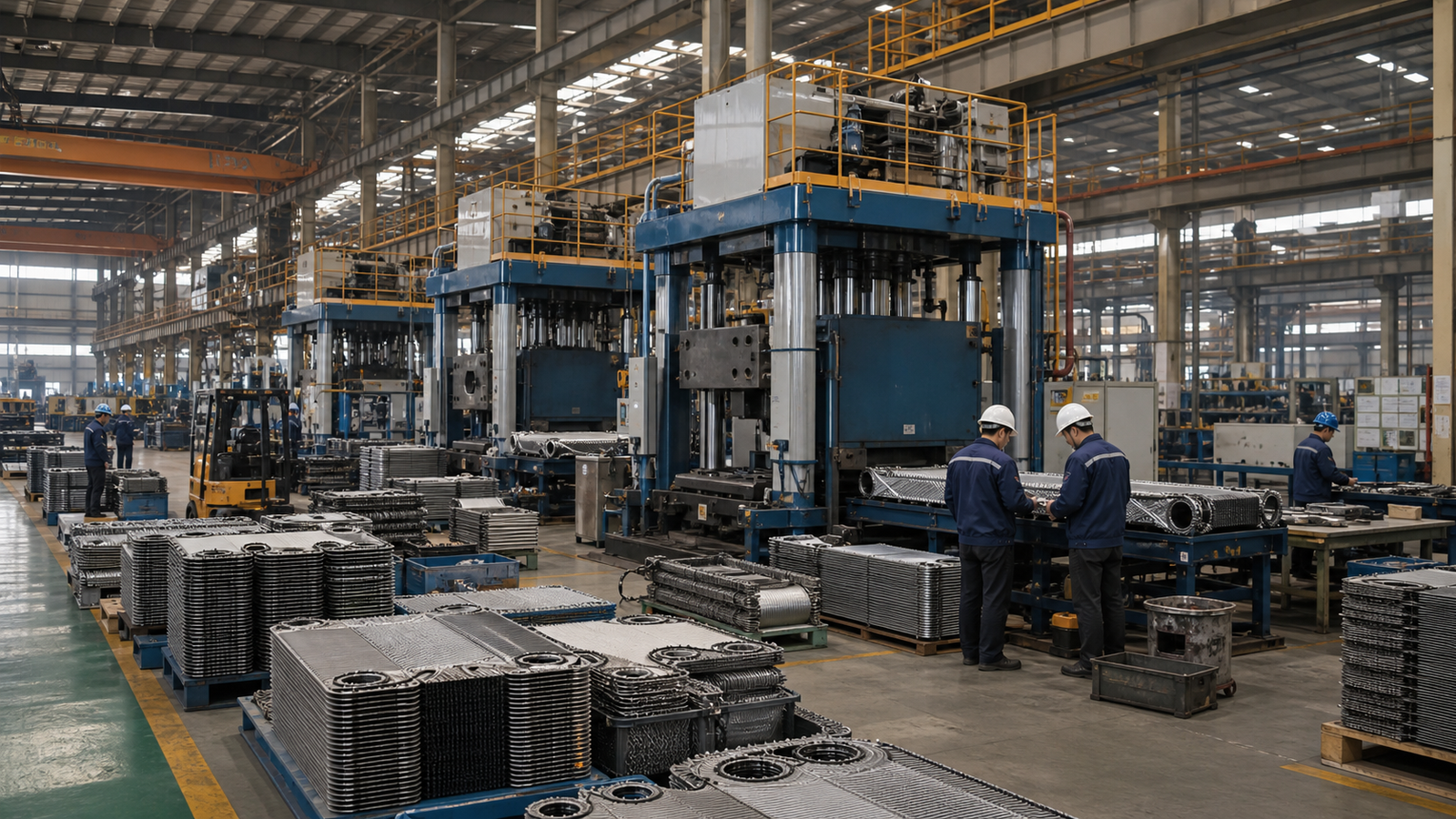
When overseas buyers are looking for Chinese heat exchanger manufacturers, the biggest risk is not "low price", but the inconsistency between corporate identity, manufacturing capabilities and quotation commitments. Some companies are real factories, some are traders, some are sales entities under the same group, and some only have websites and catalogs but lack manufacturing evidence. The goal of verifying suppliers is not to exclude all traders, but to figure out who you are dealing with, who is responsible for design, who manufactures, who takes responsibility for quality, and who can deal with problems if they arise.
The Manufacturers List on the site will organize manufacturer information, product coverage and site pages, but buyers are still advised to do their own commercial due diligence before entering into formal procurement. The following checklist is suitable for initial screening and before shortlisting suppliers for AVL or projects.
1. First check the company registration information
The first step is to confirm whether the company actually exists, whether the name is consistent, whether the unified social credit code matches, and whether the business status is normal. China's enterprise registration information can be checked from the State Administration for Market Regulation and the National Enterprise Credit Information Publicity System. In actual operation, it is recommended to use the Chinese company name and unified social credit code on the supplier's business license instead of just searching by the English name, because the English name may have multiple translations.
| Checklists | What to look for | Risk flags |
|---|---|---|
| Chinese company name | Consistent with business license, contract, and invoice | Same English name but different Chinese subject |
| Unified Social Credit Code | Does the 18-digit code match | Only give the English company name, not the code |
| Business status | Continuing, operating and other normal status | Cancellation, revocation, abnormal operation |
| Registered address | Is it consistent with the factory/office address explanation | The address changes frequently and cannot be explained |
| Legal representative | Is it consistent with the contract authorization document | Confusion between the contracting party and the payee |
This step will not prove the supplier's technical capabilities, but it will eliminate a group of unknown inquiry targets. For large projects, litigation, administrative penalties, export records, affiliated companies and collection accounts should be further checked, but this information needs to be combined with professional due diligence tools or local compliance resources.
2. Check whether the official website, site information and product capabilities are consistent
The supplier's official website, site pages, product samples and quotation documents are recommended to be consistent with each other. For example, if a company claims to produce all plate, welded plate, shell and tube, air heat exchanger, unit, and PCHE products, you need to confirm whether these products are manufactured by yourself, manufactured within the group, cooperatively manufactured, or sold through an agent. Product catalog can be used as a structured entrance: the purchaser can see the specific products displayed by a certain manufacturer on the site, such as Detachable plate heat exchanger, LS-BLOC Welded plate heat exchanger, Shell-and-tube heat exchanger or Air Radiator.
When checking, you can not only look at the "product name", but also check whether the page has materials, application industries, structural descriptions, technical characteristics, certifications or real project clues. If the product page only has a marketing slogan and no parameters, pictures, application and manufacturing details, it means that the supplier needs to provide additional evidence.
3. Certification and standards must verify the original, scope and applicability
Many vendors will display ISO, ASME, CE, PED, specialty equipment, patents, test reports or industry awards. The purchaser can pay attention to three points: first, whether the subject of the certificate is consistent with the quoting company; second, whether the scope of the certificate covers relevant products or manufacturing activities; third, whether the certificate is still within the validity period. The public description of ASME BPVC Section VIII indicates that the pressure vessel rule involves design, manufacturing, inspection, testing and certification; this means that if a project explicitly requires the ASME mark, it cannot just be based on whether the supplier is "familiar with ASME", but also its certification scope and manufacturing authorization.
| Documents | Verification Key Points | Common Misunderstandings |
|---|---|---|
| Business license | Chinese subject, unified social credit code | Only view the English promotional page |
| ISO certificate | Certification body, scope, validity period | Quality system as product certification |
| ASME/PED | Scope of authorization, manufacturing address, use of logo | Words can be said, but no evidence |
| Test report | Report number, sample, standard, date | Treat sample testing as batch product guarantee |
| Patents/Awards | Name, rights holder, relationship with product | Only proves application, not performance |
4. Ask about the manufacturing process, not just the price
The true capabilities of a heat exchanger supplier lie in manufacturing process control. For plate heat exchangers, you need to ask about plate pressing, molds, gaskets, compression dimensions and leakage tests; for welded plate equipment, you need to ask about welding methods, weld detection, plate bundle assembly, pressure testing and cleaning methods; for shell and tube equipment, you need to ask about tube plate processing, expansion/welding, baffles, non-destructive testing and core pulling space; for air heat exchangers, you need to ask about finned tubes, fans, motors, anti-corrosion, noise and winterization.
If the supplier can clearly explain "why this structure is recommended for this working condition", it is usually worth more in-depth than just giving the lowest price supplier. The TEMA standard page mentions that its new version includes a heat exchanger type selection guide, an inspection chapter and an installation, operation and maintenance appendix, indicating that mature suppliers will consider selection, inspection and maintenance together.
5. Require suppliers to submit comparable quotation packages
A comparable quotation package should at least include: product type, thermal calculation summary, main materials, design pressure and temperature, allowable pressure drop, overall dimensions, weight, interfaces, delivery date, inspection items, random documents, spare parts recommendations and deviation instructions. If the supplier only gives one line of price and delivery date, it is difficult for the buyer to judge whether it understands the working conditions. It is recommended to use Inquiry Form as a unified entrance to allow all candidate suppliers to provide feedback based on the same set of data.
6. Verification is not a one-time action
Supplier verification should occur throughout inquiry, technical clarification, contract, manufacturing and acceptance. The initial screening stage looks at the identity and product capabilities; the quotation stage looks at the quality of technical response; the contract stage looks at the subject, payment, warranty and documents; the manufacturing stage looks at progress photos, inspection records and third-party witnesses; before shipment, look at the nameplate, pressure test, packaging and document list. Truly reliable suppliers are usually willing to make this information clear, because transparency itself is its competitiveness.
7. During verification, you can check the matching degree of factory and project at the same time.
Many buyers will regard "whether there is a factory" as their only judgment, but what really needs to be verified when purchasing heat exchangers is whether the supplier can stably deliver your project. One supplier may have a manufacturing shop, but not suitable for your industry, materials, standards or documentation requirements; another supplier may be smaller, but a better match for a certain type of plate heat exchanger or certain industry applications. Therefore, verification must be done from the five dimensions of product, process, quality, documentation and communication.
The product dimension depends on whether the supplier produces similar equipment for a long time, rather than temporarily outsourcing it. The process dimension depends on whether key links such as welding, expansion joints, plate pressing, gaskets, cleaning, and pressure testing are controllable. The quality dimension depends on inspection plan, material traceability, test records and non-conformity handling. The file dimension depends on whether drawings, data sheets, certificates and manuals can be output in English or project language. The communication dimension depends on whether the supplier can proactively raise technical issues instead of just replying with price.
8. Put the verification action into the inquiry process
Verification does not have to wait until after an offer is made to begin. You can ask suppliers to provide three types of information at the same time in the inquiry materials: first, supply experience of similar products or similar industries; second, description of core manufacturing and inspection capabilities; third, quotation deviation table. Deviation tables are important because professional suppliers will often clearly state which conditions can be met, which require clarification, and which are outside the scope. A low-price quotation without a deviation table may seem simple, but may easily lead to disputes later on.
For Chinese suppliers, the company can also be verified by combining the national enterprise credit information disclosure system, and then cross-verified by the supplier's official website, product information, third-party certificates and email communication. The focus here is not to pursue "zero risk", but to detect mismatches as early as possible: for example, the business entity and the quotation entity are inconsistent, the product information is inconsistent with the inquiry product, the scope of application of the certificate is unclear, technical questions cannot be answered for a long time, and the quotation does not have standards and material descriptions. It is much cheaper to eliminate these problems in the early stages of procurement than to deal with quality disputes after the order is placed.
Data sources and site links
- State Administration for Market Regulation: https://www.samr.gov.cn/
- National Enterprise Credit Information Publicity System: https://www.gsxt.gov.cn/
- ASME BPVC Section VIII Division 1: https://www.asme.org/codes-standards/find-codes-standards/bpvc-viii-1-bpvc-section-viii-rules-construction-pressure-vessels-division-1
- TEMA Standards: https://tema.org/standards/
- HeatEx Direct removable plate heat exchanger: https://heatexdirect.com/products/shanghai-heat-transfer-equipment-co-ltd/gasketed-plate-heat-exchanger
- HeatEx Direct LS-BLOC welded plate heat exchanger: https://heatexdirect.com/products/lanzhou-lanshi-heat-exchange-equipment-co-ltd/ls-bloc-welded-plate-heat-exchanger
- HeatEx Direct shell and tube heat exchanger: https://heatexdirect.com/products/siping-viex-heat-exchange-equipment-co-ltd/tubular-heat-exchanger
- HeatEx Direct air radiator: https://heatexdirect.com/products/siping-viex-heat-exchange-equipment-co-ltd/air-radiator