

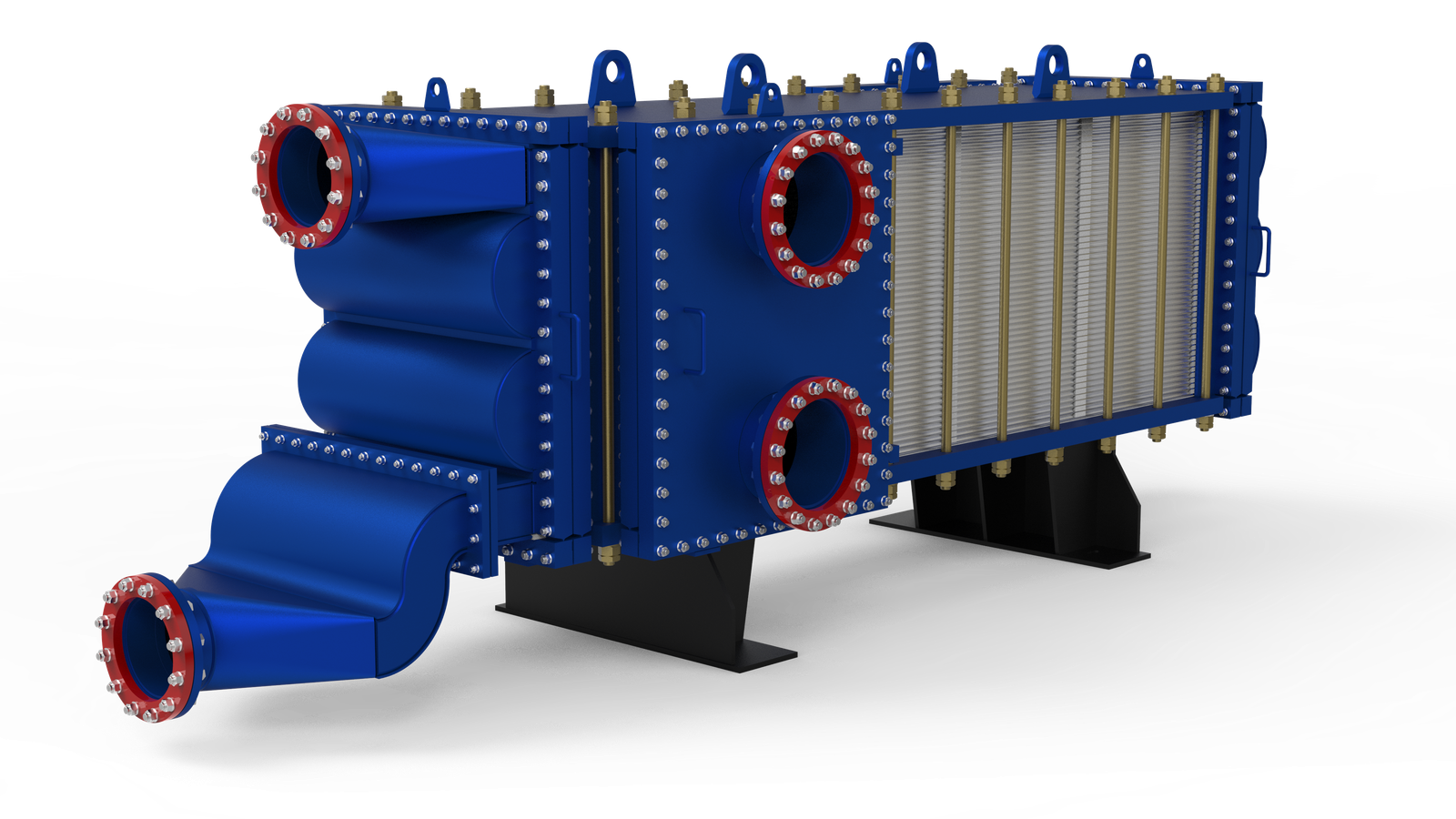
Gasketed Plate Heat Exchanger
Plate and frame heat exchanger is composed of corrugated metal plates sealed by gaskets and compressed inside a frame by tie rods with locking nuts. The port holes form continuous channels so the two fluids flow in countercurrent between the heat transfer plates, delivering high heat transfer coefficient, low fouling resistance, compact footprint, convenient maintenance and cleaning, small end approach temperature, and light overall weight.
Product Details
What is a gasketed plate heat exchanger?
A gasketed plate heat exchanger is built from corrugated metal heat transfer plates sealed by gaskets and clamped together within a frame. The plate port holes form continuous channels that distribute hot and cold media into alternating passages, where the two fluids flow in countercurrent to achieve efficient heat transfer.
Why choose this plate and frame design?
Compared with conventional shell and tube equipment, this design offers a much higher heat transfer coefficient, lower fouling factor, smaller end approach temperature, lighter weight, and a significantly smaller footprint. The modular plate pack also makes capacity adjustment, inspection, maintenance, and cleaning more convenient.
How is it designed and manufactured?
The heat transfer plate is the core element and is developed with CAD, CFD, CAE, and CAM tools to optimize plate geometry, sealing, and pressure resistance. During engineering, the required duty, flow rate, temperature program, pressure drop, plate pattern, materials, pass arrangement, and gasket selection are defined first, then the frame, nozzles, and plate pack are manufactured and assembled before pressure, leak, and performance testing.
Key Advantages
Technical Specifications
| Max Area | 4000㎡ |
|---|---|
| Nozzle Size | DN32 ~ DN500 |
| Profile Depth | 1.8 ~ 10.0mm |
| Plate Material | Austenitic stainless steel, Duplex steel, Titanium and titanium alloy, Nickel and nickel alloy |
| Design Pressure | Vacuum ~ 3.6MPa |
| Gasket Material | NBR (NS), HNBR, EPDM (ES), H-EPDM, FKM, PTFE cushion |
| Plate Thickness | 0.4 ~ 1.0mm |
| Design Temperature | <=180℃ |
Product Applications
Alumina refined mother liquor cooling
Gasketed Plate Heat Exchanger is used for refined mother liquor cooling in Bayer-process alumina production. This duty directly affects output and energy consumption, and it requires anti-scaling design, corrosion-resistant materials, pressure capability, and easy opening for cleaning.
Advantages
- Compared with welded equipment, the removable frame makes inspection and cleaning easier in scaling-prone liquor service.
- Compared with shell-and-tube exchangers, the plate structure provides high heat-transfer efficiency and compact layout.
- Plate and gasket material selection can be matched to alkaline alumina process media.
Used In
Polyolefin elastomer process control
Polyolefin elastomer production requires strict process temperature control for high-end materials such as solar encapsulation films and lightweight automotive components. Gasketed Plate Heat Exchanger is suitable for clean or moderate-temperature heating and cooling loops where compact heat transfer and maintainability are important.
Advantages
- Compared with fixed welded equipment, the removable plate pack allows inspection, cleaning, and capacity adjustment.
- Compared with shell-and-tube equipment, the plate structure improves heat-transfer efficiency in clean utility loops.
- Multiple plate and gasket materials support different polymer process utilities.
Used In
District heating pressure isolation station
In long-distance district heating networks, a pressure isolation station separates network pressure while transferring heat between primary and secondary circuits. Gasketed Plate Heat Exchanger supports higher pressure levels, larger single-unit heat loads, and large assembled heat-transfer areas for these heating network nodes.
Advantages
- Compared with direct network connection, the heat exchanger station isolates pressure and improves system safety.
- Compared with shell-and-tube exchangers, the plate design provides high heat-transfer efficiency in a smaller equipment footprint.
- The removable structure supports inspection, cleaning, and plate-pack adjustment during heating network operation.
Used In
Iron phosphate battery material production
Iron phosphate is a key precursor for lithium iron phosphate cathode materials. In iron phosphate production, plate heat exchangers are used for energy cascade utilization between process streams, precise temperature control of synthesis reactors through external circulation, and heat recovery from drying or kiln tail gas.
Advantages
- Compared with welded equipment, a gasketed exchanger can be more economical for liquid duties with moderate temperature and pressure.
- The removable plate pack supports cleaning and inspection when solids or scaling are present.
- Plate and gasket material control helps reduce unwanted metal contamination in battery material processes.
Used In
Power plant auxiliary cooling
Power plants require heat exchangers with accurate temperature control, operating-condition adaptability, and long-term reliability. Gasketed Plate Heat Exchanger can be applied to auxiliary cooling and heat exchange duties, with high-efficiency plate designs supporting improved heat transfer and lower pressure drop.
Advantages
- Compared with conventional plate patterns, high-efficiency plate designs can improve heat-transfer coefficient and reduce pressure drop.
- Compared with shell-and-tube exchangers, the plate-and-frame structure reduces footprint and simplifies maintenance.
- ASME-based design and manufacturing can support quality requirements for power industry projects.
Used In
Marine central cooling
Marine cooling systems require reliability, compact layout, corrosion control, and easy maintenance. Gasketed Plate Heat Exchanger is suitable for central coolers, lube oil coolers, and jacket water coolers, with titanium plate options and marine classification support for seawater service.
Advantages
- Compared with shell-and-tube coolers, the plate-and-frame structure is more compact and easier to open for maintenance.
- Titanium plate options improve resistance to seawater corrosion.
- The removable structure helps ship operators clean and inspect the exchanger during scheduled maintenance.
Used In
Other Products From This Manufacturer
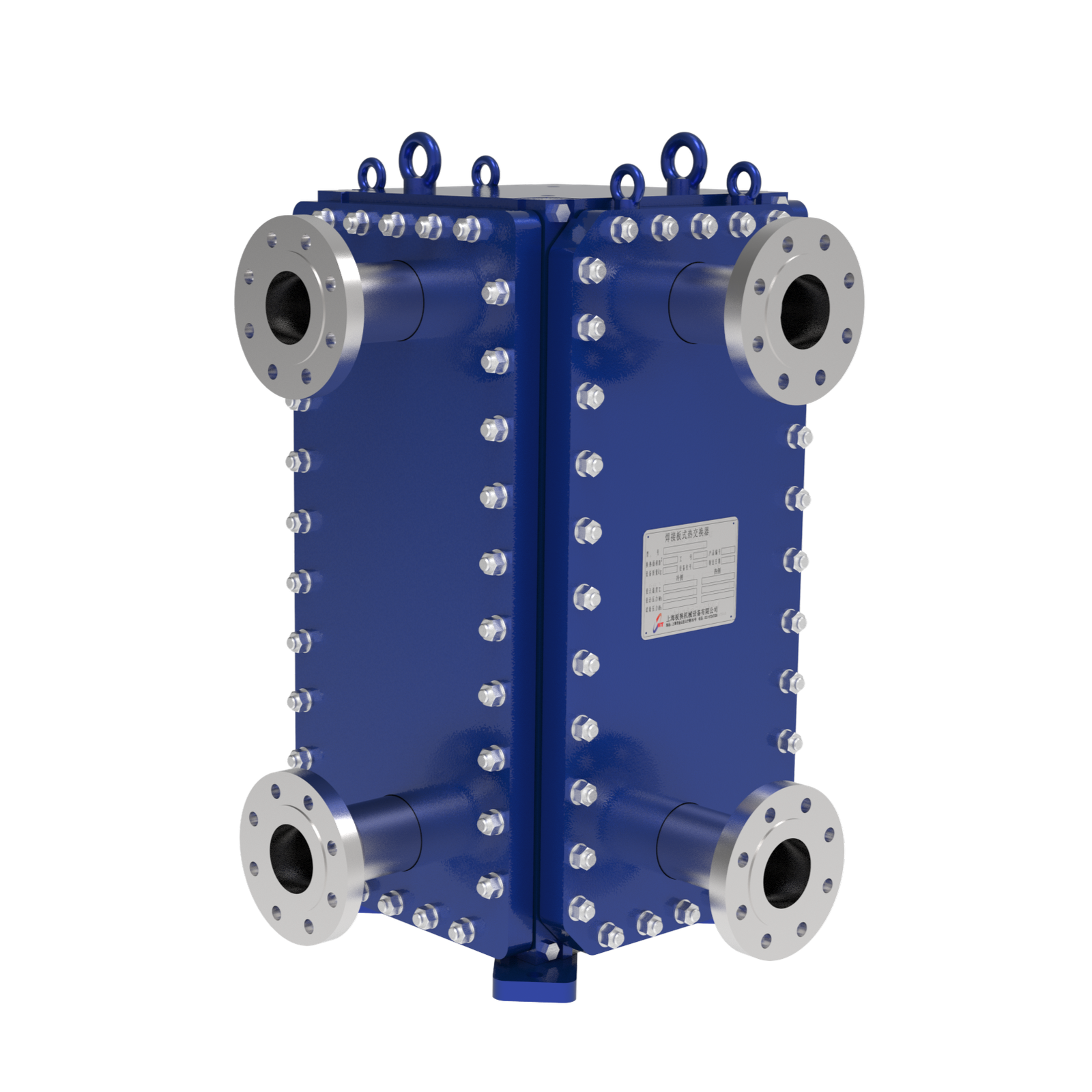
HT-BLOC Welded Plate Heat Exchanger
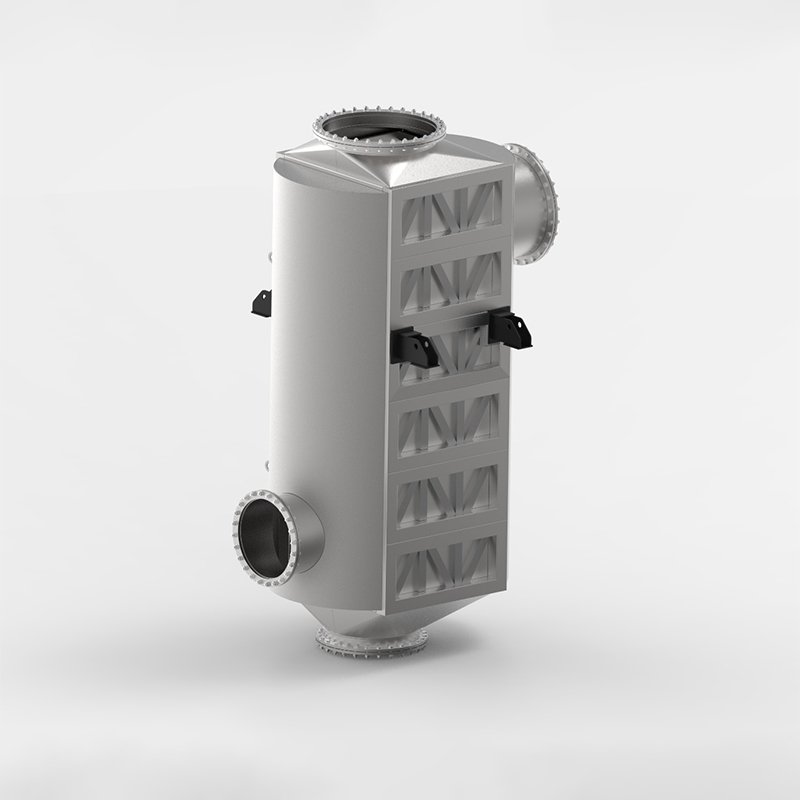
Plate Air Preheater
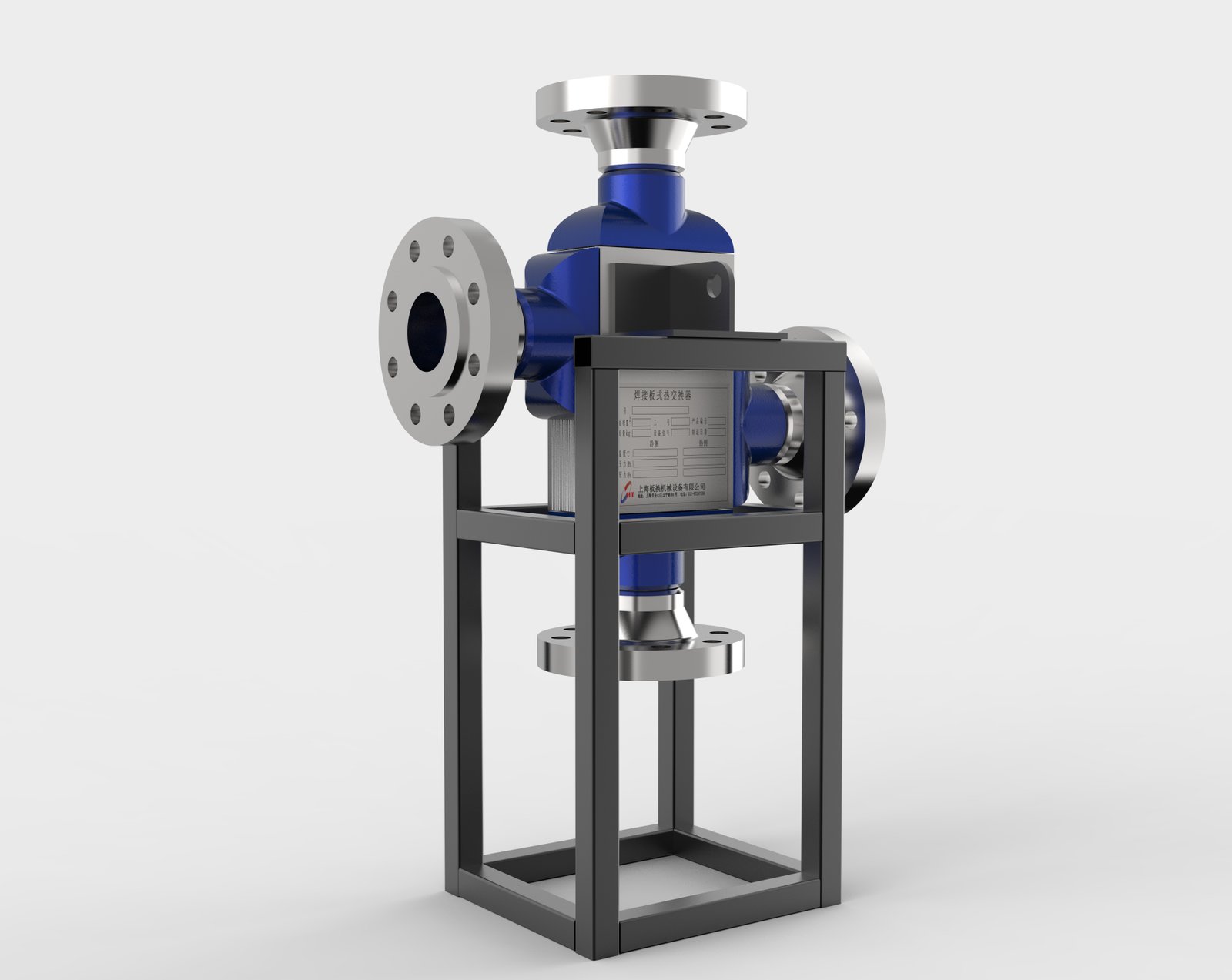
Printed Circuit Heat Exchanger
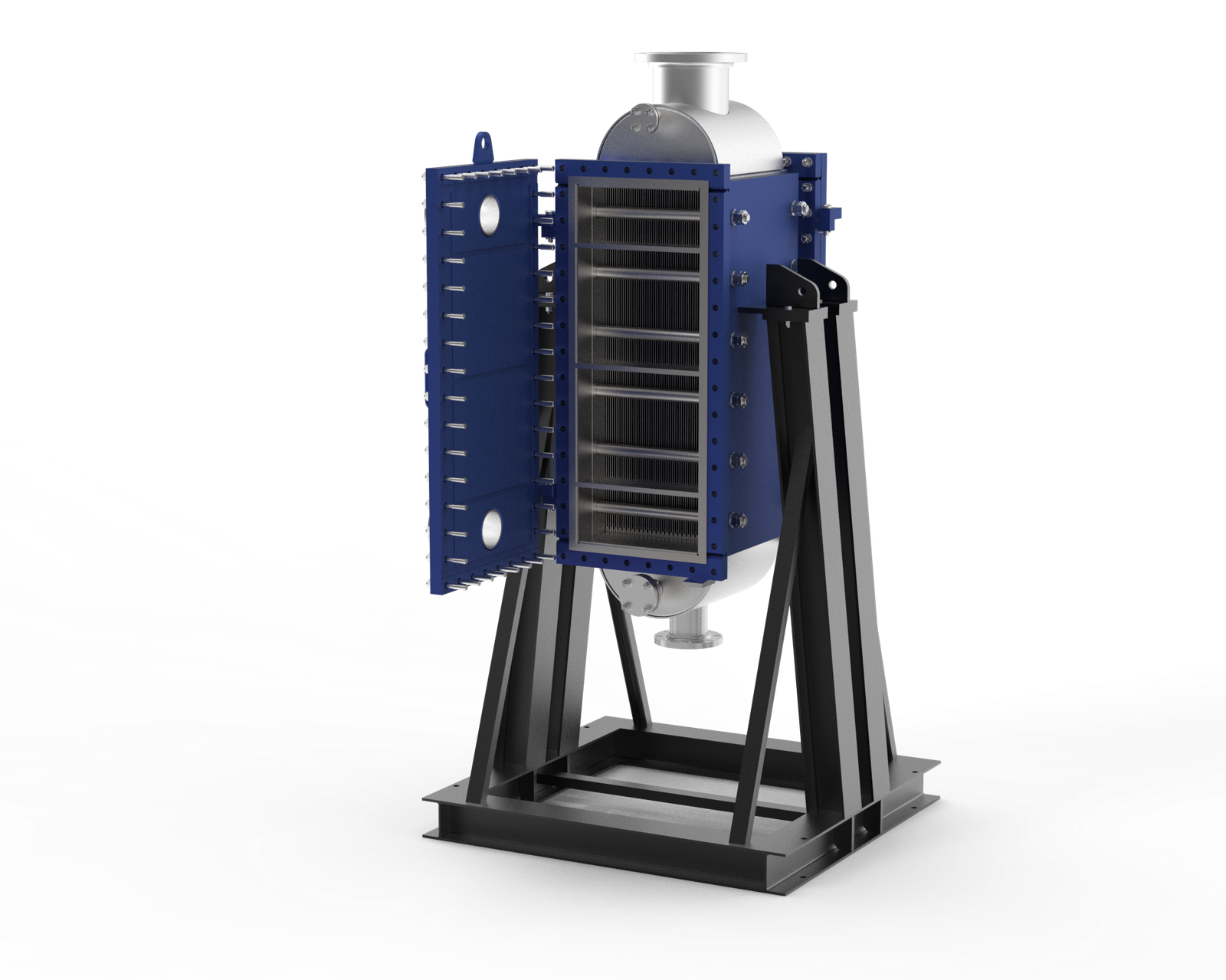
TP Welded Plate Heat Exchanger
Wide Gap Welded Plate Heat Exchanger
Quote readiness for this product
Prepare a request that is easier to follow up for Gasketed Plate Heat Exchanger
For smoother quotation follow-up, share real operating conditions, quantity, standards, materials, and project timing.
Information that helps follow-up
Operating data:Media, flow, inlet/outlet temperatures, pressure, and heat load.
Mechanical limits:Material, design code, flange standard, pressure rating, and corrosion concerns.
Commercial context:Quantity, target delivery time, destination, and project stage.