
Heat Exchanger Supplier Audit Checklist for the Petrochemical Industry: Materials, Inspections and Documentation
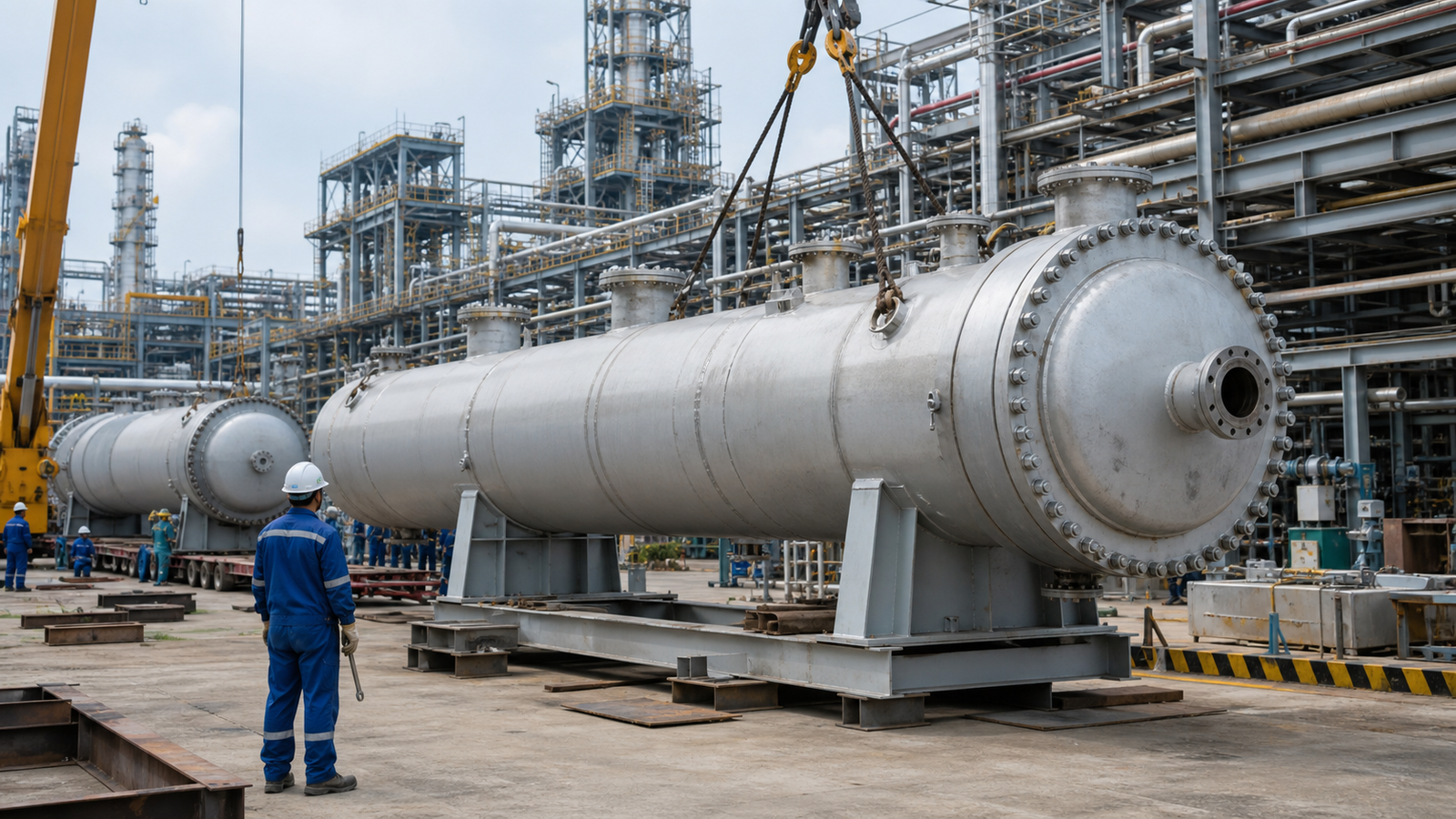
Purchasing heat exchangers for the petrochemical industry is more complex than regular utility heat exchangers. Media may be flammable, toxic, corrosive, sulfur-containing, particulate-containing, or high temperature and pressure; project specifications may require ASME, NACE, third-party inspections, material traceability, and complete documentation packages. If a supplier only offers ordinary water-to-water heat exchangers, it may not be suitable for petrochemical projects. Buyers need to review their standard understanding, material selection, manufacturing quality and document delivery capabilities.
You can refer to TP welded plate heat exchanger, HT-BLOC Welded plate heat exchanger, LS-BLOC welded plate heat exchanger and Shell-and-tube heat exchanger. Different products can serve petrochemical projects, but the review focus is different.
1. First confirm the applicability of the standard
Petrochemical projects typically have design standards, materials, inspection, testing and document deliverables written into the project specifications. ASME BPVC Section VIII disclosure covers pressure vessel design, manufacturing, inspection, testing, and certification. It is recommended to clarify in the inquiry materials which requirements are mandatory and which are only project references.
| Standards/Requirements | Applicable Key Points |
|---|---|
| ASME VIII | Pressure vessel design, manufacturing, inspection, testing and certification |
| Project Specifications | Materials, NDE, Painting, Documentation, Witness Points |
| Third Party Inspection | ITP, Witness, Material Traceability and Factory Acceptance |
2. Media risks must be included in the inquiry
Petrochemical media is recommended to be written more specifically than "oil", "gas" or "process fluid". The purchaser can provide composition, sulfide, chloride, water content, solid particles, acid value, viscosity, phase state, operating pressure temperature, design pressure temperature and corrosion allowance. For sulfur-containing or highly corrosive projects, material and hardness requirements can be stated in the project specifications. If the supplier cannot provide reasons for material selection, more technical clarification will be required later.
3. Suppliers are recommended to provide ITP and document list
Petrochemical projects require document control. The quotation stage can require the supplier to submit a preliminary list of documents, including GA drawings, thermal calculations, mechanical calculations, bill of materials, welding procedures, NDE plans, pressure test plans, painting specifications, packaging plans, quality plans and ITP. This type of documentation helps the purchaser compare whether the supplier truly understands project document controls rather than just giving the equipment a price.
4. Materials and welding cannot be underestimated
The material cost of petrochemical heat exchangers is high, and it is easy for suppliers to lower their quotations by using low-quality materials. The purchaser may request material certificates, material standards, heat treatment status, welding consumables, welding procedure qualification and non-destructive testing scope. For welded plate equipment, you can focus on welds and leakage testing; for shell and tube equipment, you can focus on tube plates, tube bundles, shells and pressure boundaries; for air cooling equipment, you can focus on tube bundles, fins, anti-corrosion, fans and motors.
5. Technical clarification requires asking about deviations
Petrochemical project quotations cannot be made without deviation tables. Suppliers may list any inconsistencies with RFQs, data sheets, standards or project specifications. The absence of deviation does not necessarily mean complete compliance, it may just be that there was no careful review. The purchaser can focus on confirming: whether the design pressure and temperature are fully met, whether the material specifications are fully met, whether third-party inspection is included, whether all documents are included, whether spare parts are included and whether on-site services are included.
6. Delivery time and price should be considered based on risk
The lowest prices for petrochemical projects may come from less documentation, fewer inspections, fewer materials, or shorter manufacturing processes. The purchaser can break down the price into equipment itself, inspection and testing, documentation, spare parts, packaging, transportation and third-party costs. Only in this way can we determine whether different suppliers are quoting within the same range.
7. Procurement Conclusion
The core of the petrochemical heat exchanger supplier audit is to allow the supplier to prove that it can deliver according to standards and project specifications, rather than just proving that it can manufacture a certain type of equipment. The purchaser may give preference to suppliers who can provide complete responses to ASME, materials, welding, inspection, documentation and deviation sheets. You can upload datasheet and project specifications through Inquiry Form, and let the platform help sort out the requirements and match relevant Chinese suppliers.
8. Petrochemical Project Suitability Requirements Deviation Table and ITP
Technical deviations in petrochemical projects are suitable for written records. The purchaser may request the supplier to provide a deviation sheet itemizing any inconsistencies with the project specifications, ASME or datasheet. The absence of bias does not mean the absence of risk. Suppliers can also clearly write "no bias" or list assumptions. The value of the deviation table is to discuss risks before placing an order, rather than discovering differences in standards, materials or inspection scopes after manufacturing is completed.
ITP, also known as Inspection Test Plan, is suitable for confirming key witness points before placing an order. It typically covers material receiving, welding, non-destructive testing, dimensional inspection, pressure testing, leak testing, painting packaging and final documentation. The purchaser can decide which points require buyer witnessing, third-party witnessing or document review based on project risk. Even if formal ITP is not required early in the project, the supplier can be asked to describe its regular inspection procedures.
9. Material and corrosion issues should be clarified in advance
Petrochemical media often involve risks such as corrosion, sulphur, chloride ions, acidic water, solvents, hydrocarbons or high temperature oxidation. If the purchaser already has material specifications, they can upload them directly; if not, it is recommended to at least indicate the medium composition, concentration, temperature, pressure and whether it contains impurities. Suppliers are better suited to raise items requiring clarification when data is insufficient, rather than directly guaranteeing material suitability. For critical equipment, material selection is best confirmed by the designer or owner's specifications, and supplier recommendations can only be used as technical input.
10. Business conditions will also affect technical results
Petrochemical heat exchanger delivery schedule may be affected by drawing confirmation, material procurement, welding process, NDE, third-party inspection and document review. When comparing delivery dates, the purchaser can ask "when does the calculation start?": when the advance payment is received, the technical agreement is signed, the drawings are approved, or when the materials arrive at the factory. Payment terms, warranty, packaging, shipping and documentation language should also be included in the comparison sheet. For export items, you can also ask the supplier to describe wooden crates, fumigation, shipping protection, spare parts and electronic copies of documents.
Ultimately, petrochemical supplier screening is not about finding the person who is best at quoting, but about finding the person who can clearly explain the standards, materials, inspections and documents. The higher the risk of the project, the more suitable it is to advance the problem to the inquiry stage.
11. Questions to ask at the technical clarification meeting
Once on the short list, the purchaser can schedule a technical clarification meeting. The meeting doesn’t need to be long, but the questions need to be specific. You can first ask the supplier to reiterate the working conditions and standards, and then ask about material selection, welding and inspection plans, pressure testing, document delivery, deviation items and delivery critical paths. Specialist suppliers will often proactively point out data gaps such as corrosion allowances, media compositions, allowable pressure drops, nozzle loads, coating requirements or third-party inspection arrangements. If the supplier only repeatedly emphasizes price and delivery date but cannot explain the technical assumptions, proceed with caution.
Meeting minutes are also important. All verbal commitments should be compiled into a written clarification form and requested to be confirmed by the supplier. For petrochemical projects, clarification sheets often become part of the contract annexes. The purchaser can use the inquiry form as the first round of data collection entry, and then organize the supplier's responses into a comparison table. Although this takes a little more time upfront, it can significantly reduce changes, rework, and document disputes after the order is placed.
Data sources and site links
- ASME BPVC Section VIII Division 1: https://www.asme.org/codes-standards/find-codes-standards/bpvc-viii-1-bpvc-section-viii-rules-construction-pressure-vessels-division-1
- TP welded plate heat exchanger: https://heatexdirect.com/products/shanghai-heat-transfer-equipment-co-ltd/tp-welded-plate-heat-exchanger
- HT-BLOC welded plate heat exchanger: https://heatexdirect.com/products/shanghai-heat-transfer-equipment-co-ltd/ht-bloc-welded-plate-heat-exchanger
- LS-BLOC welded plate heat exchanger: https://heatexdirect.com/products/lanzhou-lanshi-heat-exchange-equipment-co-ltd/ls-bloc-welded-plate-heat-exchanger
- Shell and tube heat exchanger: https://heatexdirect.com/products/siping-viex-heat-exchange-equipment-co-ltd/tubular-heat-exchanger