
Huadian Wusu Retrofit: How Chinese-Made Plate-and-Shell Heat Exchangers Replaced Imported Heaters and Reached 92% Condensing Efficiency
For the people who maintain a plant, the sound they fear most is not the noise of machines but sudden silence, the sign that equipment has stopped. When the equipment is a heat network heater, a breakdown means interrupted heating and production, wasted energy and pressure to fix things fast. Many plants face the same dilemma: imported equipment bought at great cost years ago loses performance as it ages, drains poorly and wastes energy. Replacing it is expensive and slow; keeping it means low efficiency and poor carbon figures.
How can such a system be renewed without disrupting production? The retrofit at Huadian Xinjiang Wusu Energy (Huadian Wusu) offers one answer.
A Flagship Plant With an Efficiency Problem
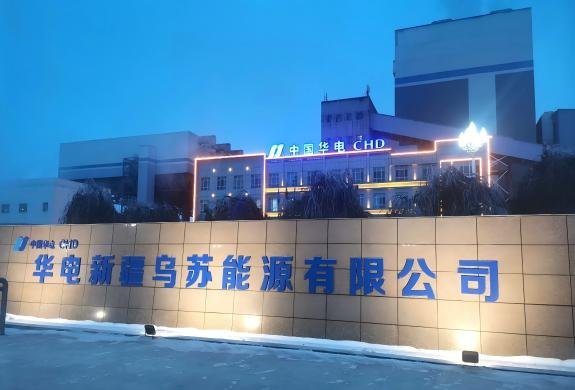
Huadian Wusu is a wholly owned subsidiary of China Huadian Corporation, one of China's large state-owned power groups, and an important power source in northern Xinjiang. With two 330 MW extraction units, it uses combined heat and power to supply process steam and heating to nearby industrial parks for green food, textiles and garments, and it has long worked to cut energy use and emissions.
In the plant's primary heating station, however, several heat exchangers from a European brand had become a bottleneck. As they aged, condensate drainage became difficult and their capacity could no longer meet the planned expansion. Without solving these problems, operating costs would stay high and the plant would struggle to keep its standing as a model of environmental performance.
The engineering team faced a hard brief: increase capacity without interrupting power generation or heating, and complete the replacement within the limited outage windows.
Selection: A New Solution, Not Just New Equipment
The site combined large temperature differences, high steam-side temperatures and strict limits on condensate temperature, so a like-for-like replacement would not work. After several rounds of review, the project team dropped the plan to buy the same imported products again and looked for a Chinese-made alternative. The selection criteria were clear:
- Small size, large capacity. The installation space was tight, so a more capable unit had to fit where the old one had been.
- High pressure and stable temperature. The unit had to handle demanding steam conditions, with a design pressure above 4.0 MPa.
- Smart control. Solving the old units' drainage problems required an upgraded control system.
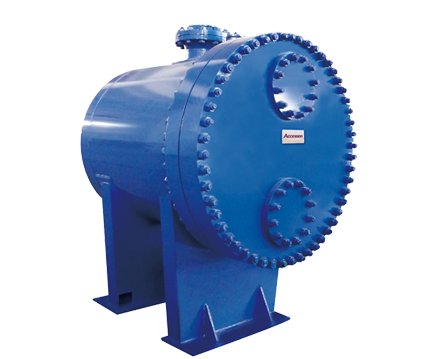
Accessen's AWPS series plate-and-shell heat exchanger won the contract on its performance at high temperature and pressure and on Accessen's ability to tailor the design to site conditions.
Four Advantages of the Solution
The retrofit was not a simple swap of old for new but a system-level improvement in efficiency, built on four points:
- Pressure capacity and heat transfer. The AWPS series plate-and-shell heat exchanger is rated above 4.0 MPa, so it copes with high-pressure steam. According to Accessen, its heat transfer coefficient reaches 5,000 W/(m²·K), well above that of a conventional shell-and-tube heat exchanger. It can therefore transfer more heat in the same volume, which resolved the conflict between a small space and a large load.
- Smart drainage. To fix the drainage problems of the imported units, the new system has an optimized 3D layout and piping, smart control of the drain section and adaptive control of the temperature difference in several zones. This keeps the pressure drop under control, solves the drainage problem and raised the condensing efficiency to 92%, keeping steam operation stable over the long term.
- Compact and easy to install. The AWPS series combines the efficiency of a plate heat exchanger with the pressure capability of a shell-and-tube unit. Its compact design fitted the limited space at Huadian Wusu without major building work, which shortened construction time considerably.
- Lower life-cycle cost. A plate-and-shell heat exchanger has no gaskets to age, costs less to run, fouls less and is easier to clean, so annual maintenance costs fall significantly.
Phase One and Phase Two
The results speak for themselves. Phase one started in November 2023 with the replacement of the No. 2 heat network heater. The new unit passed a 72-hour performance test and a 168-hour trial run, and its main performance figures met or exceeded the original design.
After a year of stable operation, phase two of the energy-saving and expansion retrofit started in October 2024. This time Huadian Wusu upgraded the remaining No. 1 and No. 3 heaters with Accessen AWD series all-welded plate-and-frame heat exchangers. The focus of this phase was deeper energy saving: lowering the condensate drain temperature to make the fullest use of the primary energy. At the same time, the old sensors and instruments in the station were replaced so that complete operating data can be collected for finer management and analysis of the savings.
What the Industry Can Learn
Huadian Wusu offers a model for equipment upgrades in the process industries. High-end heat exchangers were long dominated by European and American brands, but Chinese-made equipment can now compete under high temperature, high pressure and large temperature differences. For plant managers and engineers the case carries two messages:
- Replacing imported units with Chinese-made ones is feasible and can be better. Under the right conditions, a custom Chinese plate-and-shell heat exchanger can outperform older, general-purpose imported units in efficiency and control.
- Efficiency gains come from the whole system. Replacing the heat exchanger is not enough on its own. Piping, control and instrumentation have to be upgraded too to recover as much heat as possible from the steam.
Why Plate-and-Shell Works Here
A plate-and-shell heat exchanger consists of a shell, a pack of heat transfer plates and the inlet and outlet nozzles. Compared with a conventional shell-and-tube unit, the channels formed by the plates create strong turbulence. This brings two benefits: a very high heat transfer coefficient, even at low velocity, and a degree of self-cleaning, because the high shear at the wall limits fouling, a common cause of rising thermal resistance in shell-and-tube units.
For plants that want to save energy, cut carbon or renew their equipment, choosing the right heat exchanger is more than replacing a part. It sets up the plant's efficiency for years to come.