
How Accessen Heat Exchangers Handle Sandy, Corrosive Seawater at the 2×1,000 MW Datang Dongying Power Plant
The Seawater Problems Facing Coastal Power Plants
For a coastal 1,000 MW ultra-supercritical coal-fired unit, seawater is the obvious cooling source because it saves a great deal of fresh water. But seawater is hard on equipment. It carries sand and silt, salt and marine organisms, and over time it causes a series of familiar problems: sediment settles in the flow channels, chloride ions corrode the plates, and summer changes in seawater temperature cut heat transfer.
Many coastal plants select heat exchangers mainly on heat transfer area and pay too little attention to the seawater itself. Within a few years the equipment loses performance, plates corrode and leak, and units may even have to be shut down for repairs, which affects the safe and steady output of the whole 1,000 MW unit.
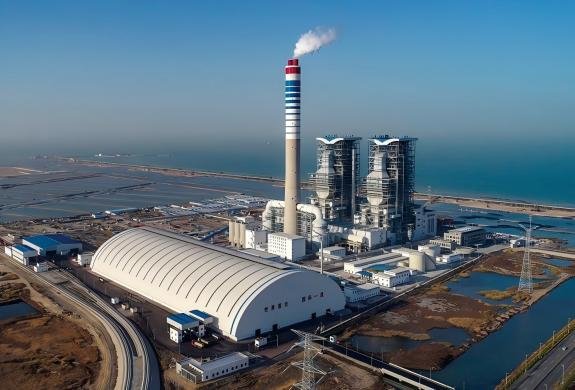
Datang Dongying Power Plant on the Shandong coast runs two 1,000 MW ultra-supercritical double-reheat coal-fired units, which entered service in 2020. The plant uses seawater to cool its closed cooling water system and also runs a heat recovery system that puts heat to use step by step. With both duties combined, the heat exchangers must resist both clogging and corrosion. Plant engineers often ask why some plate-type heat exchangers clog quickly in sandy seawater while others run reliably for years, and what design details make the difference.
Wider Channels Reduce Sediment Build-Up
Filters upstream help, but the first line of defense against sediment is the channel width of the heat exchanger itself. In a heat exchanger with standard channels, fine sand easily lodges in the gaps between the plate corrugations. It builds up over time and narrows the flow passage, so part of the heat transfer area is wasted, the pressure drop keeps rising, and the unit no longer reaches its design cooling. Chemical cleaning or high-pressure water jetting restores performance only for a while without removing the cause, and cleaning takes up outage time and adds maintenance costs.
For Datang Dongying, Accessen widened the flow channels of the custom-built heat exchangers so that sediment is less likely to settle and the design heat transfer area can be fully used. The supply comprises four closed cooling water coolers and four closed cooling water heat recovery exchangers, the largest with a heat transfer area of 1,570 m², sized for the heat loads of 1,000 MW units. With these channels, suspended sediment is carried out of the exchanger with the flow instead of settling, cleaning is needed less often, and the heat recovery system keeps delivering its energy savings.
Titanium Plates for Long-Term Corrosion Resistance
The high chloride content of seawater is the main cause of metal corrosion. Carbon steel and ordinary stainless steel plates in contact with seawater are prone to pitting and crevice corrosion, which can perforate a plate. An internal leak lets seawater into the demineralized water circuit, which directly threatens the boiler, the steam turbine and other main equipment. Replacing plates often is costly, and the work itself takes the unit out of service, which is very expensive for a thermal power plant that is expected to run continuously.
On the seawater side, Accessen uses titanium plates, with a design corrosion life of up to 20 years, matching the long operating cycles of ultra-supercritical double-reheat units. Titanium is highly resistant to chloride attack and to seawater erosion, which lowers the risk of plate leaks. When the seawater warms up in summer, the heat exchangers still transfer heat steadily, without a sharp loss of cooling capacity. This keeps the closed cooling water system stable and lets the heat recovery system keep using the unit's surplus heat, helping the plant meet its coal-saving and emission targets.
Lessons for Coastal Power Projects
As auxiliary equipment for cooling and heat recovery, the heat exchangers directly affect whether a plant's energy-saving targets are met in practice. At Datang Dongying, the combination of widened channels and titanium plates has dealt with the two long-standing problems of seawater service: sediment build-up and corrosion.
New or upgraded coastal power projects often compare heat exchangers on heat transfer area alone and miss the hidden risks of the operating fluid. For seawater duties, area is only the starting point. Channel design against sediment, resistance to seawater corrosion and steady performance across the full load range all matter. Only when the heat exchangers are suited to seawater can the heat recovery system stay in service and turn waste heat into real energy savings.