
ASME, PED or China's TSG: Which Pressure Equipment Rules Apply to Your Heat Exchanger?
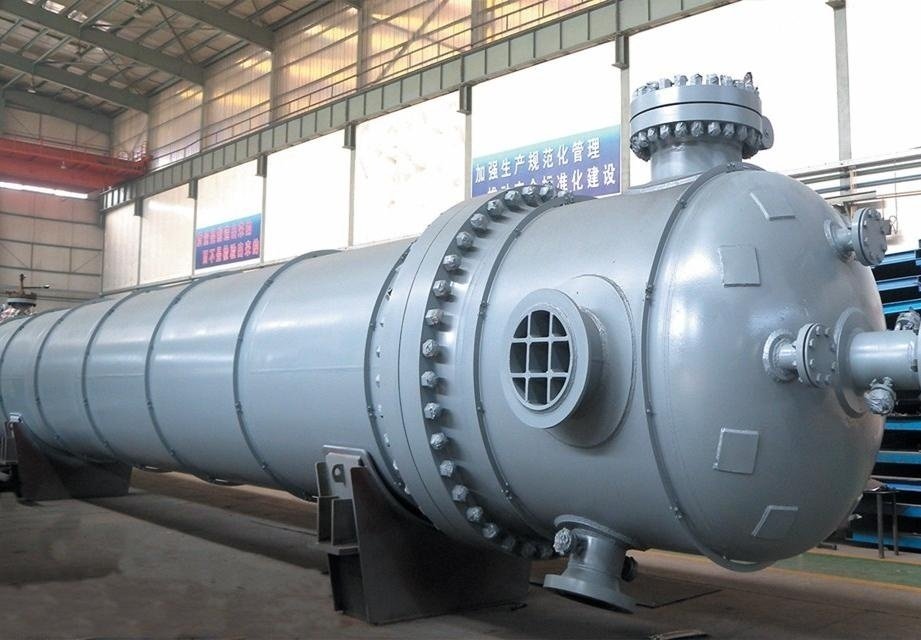
The same heat exchanger can be built to different sets of pressure equipment rules. The rules decide how the unit is calculated, which materials and welding procedures may be used, who inspects it, which documents come with it and which mark goes on the nameplate. What matters is where the unit will be installed, not where it is made. A Chinese factory building for a plant in Texas, Rotterdam and Shandong may have to follow three different sets of rules for the same design.
This guide compares the three systems buyers meet most often when sourcing from China: the ASME Boiler and Pressure Vessel Code, the European Pressure Equipment Directive (PED) and China's own TSG rules. It ends with a short look at other markets and a list of questions to ask a supplier.
1. The Short Answer: Follow the Rules of the Installation Site
| Where the unit is installed | Rules that usually apply |
|---|---|
| United States | ASME BPVC Section VIII, as adopted by the state or city, often with National Board registration |
| Canada | ASME Section VIII under CSA B51, with a Canadian Registration Number (CRN) for the design in each province |
| European Union and EEA | Pressure Equipment Directive 2014/68/EU, with CE marking |
| China | TSG 21 and the GB/T standards, such as GB/T 150 and GB/T 151 |
| Eurasian Economic Union | Technical regulation TR CU 032/2013, with EAC marking |
| Other countries | National rules; many project specifications in the Middle East, Africa and Asia call for ASME or PED |
A project specification can also require a code that the law does not, for example ASME for a refinery outside the United States. In that case the contract decides.
2. ASME Boiler and Pressure Vessel Code, Section VIII Division 1
Most heat exchangers built to ASME follow Section VIII Division 1, the rules for the construction of pressure vessels. Shell-and-tube designs also use Part UHX for tubesheet calculations and are often specified to TEMA standards as well, although TEMA is an industry standard, not a legal code.
What ASME work involves:
- An authorized manufacturer. The factory must hold an ASME Certificate of Authorization for the "U" designator, issued for a specific shop address. Units are marked with the ASME Certification Mark with the U designator, still widely called the "U stamp".
- An Authorized Inspector. An inspector employed by an Authorized Inspection Agency reviews the design calculations, monitors fabrication, witnesses the hydrostatic test and signs the Manufacturer's Data Report (Form U-1, or U-1A).
- National Board registration. Many US jurisdictions also require the unit to be registered with the National Board of Boiler and Pressure Vessel Inspectors, shown by an "NB" number on the nameplate.
- Materials and welding to ASME. Materials come from Section II (such as SA-516 plate or SA-213 tubes) with certificates that meet those specifications, and welding procedures and welders are qualified under Section IX.
- The hydrostatic test. At least 1.3 times the maximum allowable working pressure, multiplied by the lowest ratio of allowable stresses at test and design temperature.
3. The European Pressure Equipment Directive (PED)
The PED applies to pressure equipment with a maximum allowable pressure PS above 0.5 bar placed on the EU market. Unlike ASME, it is a directive that sets essential safety requirements; how they are met is left to the manufacturer, usually through harmonized standards such as EN 13445 for unfired pressure vessels.
- Categories. Each pressure chamber is classified by its maximum allowable pressure PS, its volume, the state of the fluid (gas or liquid) and the fluid group: group 1 for dangerous fluids, group 2 for all others. The result is category I, II, III or IV. Where a vessel has several chambers, such as the two sides of a heat exchanger, it takes the highest category of its chambers. Below category I, the equipment is built to "sound engineering practice" and carries no CE mark.
- Conformity assessment. In category I, the manufacturer's own production control (module A) is enough. From category II upward, a notified body takes part, more closely as the category rises: for example, modules D1 or E1 in category II, B+D or H in category III, and B+D, G or H1 in category IV.
- Essential requirements from Annex I. For categories II to IV, welding procedures and welders must be approved by a competent third party. For categories III and IV, NDT personnel must also be approved by a recognized third party. Main pressure parts need material certificates with specific product control.
- The pressure test. At least the greater of 1.25 times the maximum loading at maximum allowable temperature, or 1.43 times PS.
- Documents and marking. The manufacturer issues an EU declaration of conformity and applies the CE mark, followed by the notified body's identification number where one is involved.
A unit designed to ASME can be supplied under the PED, but the manufacturer must show that it meets the essential requirements, for example on materials and on the higher test pressure, so "ASME-designed" and "PED-compliant" are not the same thing.
4. China: TSG 21, the GB/T Standards and the Manufacturing Licence
In China, pressure vessels are special equipment under the Special Equipment Safety Law. The main safety regulation is TSG 21-2016, the Supervision Regulation on Safety Technology for Stationary Pressure Vessels, together with its first amendment.
- Scope. TSG 21 covers vessels with a working pressure of at least 0.1 MPa, a volume of at least 0.03 m³ and an inside diameter of at least 150 mm, holding gas, liquefied gas, or liquid at or above its standard boiling point. Vessels in scope are classed as class I, II or III by pressure, volume and the hazard of the fluid.
- An important exclusion. The 2016 text lists plate heat exchangers, spiral plate heat exchangers, air-cooled heat exchangers and cooling coils among the equipment it does not apply to. In China, shell-and-tube heat exchangers that meet the scope conditions are regulated as pressure vessels, while plate heat exchangers are built to product standards such as NB/T 47004.1 for gasketed units.
- Design and construction standards. GB/T 150 for pressure vessels (the current edition is GB/T 150-2024, in force since 1 February 2025), GB/T 151 for shell-and-tube heat exchangers and NB/T 47013 for non-destructive testing.
- The manufacturing licence. A factory needs a pressure vessel manufacturing licence under TSG 07-2019. The licence class limits what it may build: class D covers low- and medium-pressure vessels, where most heat exchangers fall, while classes A1 and A2 cover high-pressure vessels.
- Supervision inspection. An authorized special equipment inspection institute carries out supervision inspection during manufacture. Each vessel ships with a product certificate, quality documents and a special equipment supervision inspection certificate.
- The pressure test. 1.25 times the design pressure for a hydrostatic test, multiplied by the ratio of allowable stresses at test and design temperature.
For a buyer outside China, a TSG licence does not replace ASME or PED. But it shows that the factory runs a quality system audited by the Chinese authorities, and its licence class shows the size and pressure of vessels it is allowed to build. This is one of the first things to check, as described in our guide to verifying a Chinese heat exchanger manufacturer.
5. The Three Systems Side by Side
| ASME Section VIII Div. 1 | PED 2014/68/EU | China TSG 21 | |
|---|---|---|---|
| Legal basis | Adopted by US states and Canadian provinces | EU directive, law in the EU and EEA | Special Equipment Safety Law |
| Factory authorization | ASME Certificate of Authorization (U) | Notified body approval of the quality system, or per-unit checks, depending on the module | TSG 07 manufacturing licence |
| Independent inspection | Authorized Inspector | Notified body (categories II to IV) | Special equipment inspection institute |
| Mark | ASME Certification Mark with U; NB registration where required | CE mark with notified body number | Nameplate to TSG 21 |
| Key document | Manufacturer's Data Report (U-1 or U-1A) | EU declaration of conformity | Product certificate and supervision inspection certificate |
| Minimum hydrostatic test | 1.3 × MAWP × stress ratio | Greater of 1.25 × maximum loading or 1.43 × PS | 1.25 × design pressure × stress ratio |
| Typical standards | Section VIII Div. 1, Part UHX, TEMA | EN 13445 | GB/T 150, GB/T 151, NB/T 47004 |
6. Other Markets in Brief
- Eurasian Economic Union (Russia, Kazakhstan, Belarus, Armenia and Kyrgyzstan). Technical regulation TR CU 032/2013 on equipment operating under excess pressure requires a certificate or declaration of conformity issued through an accredited body in the union, and the EAC mark.
- Canada. Besides ASME construction, the design must be registered in each province where the unit will be installed, which gives the CRN. Allow time for this, because each province reviews the design.
- Great Britain. Pressure equipment falls under the Pressure Equipment (Safety) Regulations 2016 and the UKCA mark. Check the current government guidance on whether CE marking is accepted for your product.
- Australia. Pressure vessels are designed to AS 1210, and many designs must be registered with the state regulator before use.
7. Questions to Ask a Chinese Supplier
- Which authorizations do you hold (ASME U, PED, TSG licence, EAC)? Please send copies.
- Does the scope cover this type of heat exchanger, this shop address and this pressure range? Is the certificate current?
- Who is your Authorized Inspection Agency or notified body, and how far ahead must their visits be booked?
- Which similar units have you built under this code in the last two years?
- Can you do the code calculations in-house, and will you submit them for approval?
- Can you source ASME- or EN-certified materials for this order, and how long do they take?
- Are your welding procedures and welders already qualified under this code for these materials?
- How do the code requirements change the price and the delivery time?
The last question matters because code work adds inspection fees, certified materials and scheduling. Our lead time guide shows where code inspection fits into the schedule, and our factory inspection guide covers the tests you can witness.
What This Means for Buyers
State the required rules in the RFQ, based on where the unit will be installed and what the project specification says. Ask each supplier to confirm, in writing and with certificates, that it can build under those rules, and check that the scope fits your unit. Remember that in China a plate heat exchanger is not treated as a pressure vessel under TSG 21, so for European or North American projects the PED or ASME requirements must be spelled out clearly rather than assumed.
Sources and Related Pages
- ASME BPVC Section VIII Division 1, rules for construction of pressure vessels: https://www.asme.org/codes-standards/find-codes-standards/bpvc-viii-1-bpvc-section-viii-rules-construction-pressure-vessels-division-1
- The National Board of Boiler and Pressure Vessel Inspectors: https://www.nationalboard.org/
- European Commission, Pressure Equipment Directive 2014/68/EU: https://single-market-economy.ec.europa.eu/sectors/pressure-equipment-and-gas-appliances/pressure-equipment-sector/pressure-equipment-directive_en
- Directive 2014/68/EU, full text: https://eur-lex.europa.eu/eli/dir/2014/68/oj
- TSG 21-2016, Supervision Regulation on Safety Technology for Stationary Pressure Vessels (Chinese text, scope in sections 1.3 to 1.5): https://zcdep.dhu.edu.cn/_upload/article/files/6b/e0/17da8651445c9c4f881babd67899/b0b52a70-0733-4ebe-a9be-1506a20cb337.pdf
- First amendment to TSG 21-2016 (Chinese text): https://amr.guizhou.gov.cn/ztzl_85/2021naqscyhd/2021naqscy/202106/P020210607408521803912.pdf