
Shipping a Heat Exchanger From China: Packaging, Incoterms and What to Check on Arrival
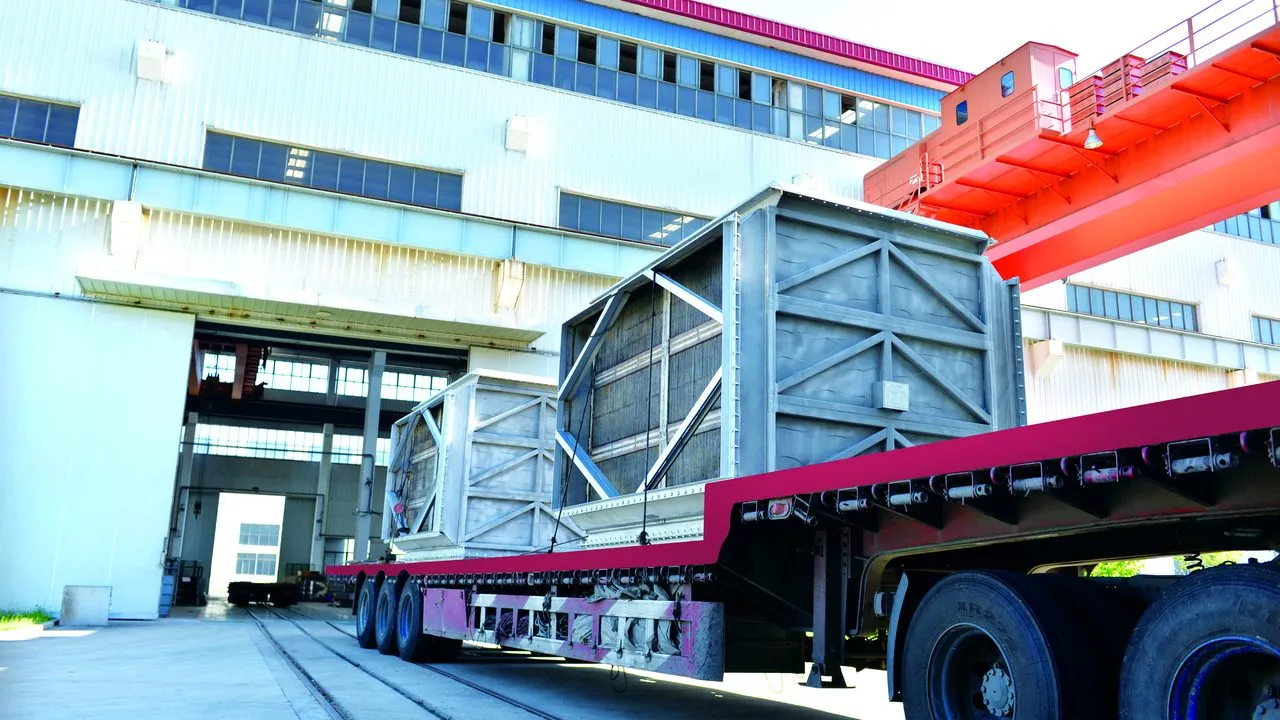
A heat exchanger can pass every test in the factory and still arrive with a bent nozzle, a cracked plate or water left inside since the hydrostatic test. Most transport damage can be prevented with the right preservation and packing, and most disputes can be avoided if the contract says clearly who carries the risk at each stage.
This guide covers the decisions a buyer makes about shipping: the Incoterm, insurance, preservation and packing, the documents, and the inspection when the unit arrives. For the time each stage takes, see how long it takes to buy a heat exchanger from China. To include shipping in a quote, state the destination and the Incoterm you want in the RFQ form.
1. Agree the Incoterm First
Incoterms are the rules of the International Chamber of Commerce (ICC) that say where the seller delivers, who pays for transport and insurance, and where the risk passes to the buyer. The rules used most often for heat exchangers from China:
| Rule | Seller delivers | Main freight paid by | Risk passes to buyer |
|---|---|---|---|
| EXW (Ex Works) | At its own premises, not loaded | Buyer | At the factory; the buyer also handles export clearance |
| FCA (Free Carrier) | To the buyer's carrier at a named place, such as the factory or a terminal | Buyer | When handed to the carrier |
| FOB (Free On Board) | On board the vessel at the port of shipment | Buyer | When on board |
| CFR / CIF | On board the vessel at the port of shipment | Seller, to the destination port | When on board at the port of shipment |
| CPT / CIP | To the first carrier | Seller, to the named destination | When handed to the first carrier |
| DAP (Delivered at Place) | At the named destination, ready for unloading | Seller | At the destination; the buyer handles import clearance and duties |
Three points matter in practice:
- FOB and containers. FOB and CIF are rules for sea and inland waterway transport. The ICC Academy notes that containerised goods are usually handed over at a container terminal, not on board, and may wait there for days, so FCA is the more appropriate rule for them. For an exchanger shipped in a container, consider FCA instead of FOB, and CIP instead of CIF.
- "C" rules move the risk early. Under CFR, CIF, CPT and CIP, the seller pays the freight but the risk passes to the buyer at the start of the main journey. If the unit is damaged at sea, it is the buyer who claims on the insurance.
- Name the place exactly. "FCA Shanghai" is not enough. State the factory address or the terminal, and the destination port or site for C and D rules.
2. Insurance: Check the Level of Cover
Under CIF, the seller has to buy insurance only at the minimum level, Clause (C) of the Institute Cargo Clauses, which covers a limited list of events. Under CIP, Incoterms 2020 requires the wider Clause (A) cover, often called "all risks". A heat exchanger is valuable and easily damaged, so if you buy CIF, ask for Clause (A) cover in the contract, or insure the cargo yourself. Under FCA, FOB or EXW, insurance for the main journey is the buyer's job.
3. Preservation Before Packing
Water left after the hydrostatic test is a common cause of corrosion in transit and storage. Before the unit is packed, the supplier should:
- drain and dry both sides of the exchanger;
- close all nozzles with blind flanges or plugs, and plug vents and drains;
- protect flange faces, threads and exposed bolts against corrosion;
- for units that will be stored for long periods, fill them with dry nitrogen at a small positive pressure, or use a desiccant inside, as agreed with the buyer.
BN-G-Y009, a guide to preserving equipment on construction sites, gives these steps for shell-and-tube exchangers: drain and dry, blank off all nozzles, plug vents and drains, grease exposed bolts and flanges, and where specified keep a nitrogen pressure of 0.5 bar(g). Where nitrogen is impractical, it allows dry air with moisture absorbers that are checked monthly. It also states that a nitrogen blanket is imperative for austenitic stainless steel equipment in storage. Nitrogen can suffocate, so a unit filled with nitrogen must be labelled, and the warning has to reach the people who will open it.
For plate heat exchangers, the plate pack stays tightened during transport. Taco's plate heat exchanger manual notes that tightening bolts can loosen in transit and should be checked on receipt, before start-up.
4. Crates, Wood Packaging and Lifting
- ISPM 15. Wood packaging thicker than 6 mm, such as crates, skids and dunnage, must be debarked, then heat treated (the wood core held at 56 °C for at least 30 minutes) or fumigated, and stamped with the ISPM 15 mark. Plywood and other processed wood are exempt. Without the mark, the importing country can hold, treat or reject the shipment.
- Fixing. The unit should be bolted or strapped to a skid or the crate base, with bracing against movement and nozzles protected from impact.
- Marking. Mark the lifting points, the centre of gravity, the gross weight and the shipping marks, including your order number, on the outside of each package.
- Lifting. Danfoss's manual warns never to lift a plate heat exchanger by its connections or the studs around them. Ask the supplier to show the lifting arrangement on the packing drawing.
- Indicators. For sensitive or high-value units, shock and tilt indicators on the crate show whether it was dropped or tipped on the way.
Ask for photos of the unit after preservation and of the finished crate before it is closed. They cost the supplier little and are useful if there is a claim.
5. Container, Flat Rack or Breakbulk
Units that fit in a standard container travel most cheaply and with the most sailings. Tall units that must be loaded by crane go in open-top containers. Wide or heavy units go on flat racks or as breakbulk cargo, which have fewer sailings and need lifting plans at both ends. Ask the supplier for the packed dimensions and weights early, because they decide the type of shipment and often the freight cost.
6. Shipping Documents
| Document | Why it matters |
|---|---|
| Commercial invoice | Customs value and description, including the HS code |
| Packing list | Contents, weights and dimensions of each package |
| Bill of lading or air waybill | Proof of shipment and, for an original bill of lading, the right to collect the cargo |
| Certificate of origin | Needed to claim a preferential duty rate where a trade agreement applies |
| Insurance certificate | Under CIF or CIP, the cover bought by the seller |
| Material certificates, test reports, drawings and manual | Needed for installation, inspection and later spare parts |
| Export licence | Only for the items that need one; see section 5 of the lead time guide |
Heat exchangers for industrial use are usually classified under HS 8419 50. The HS 841950 page explains the code. Your customs broker confirms the national tariff number.
7. When the Unit Arrives
Check before you sign for the delivery:
- Look at every package for damage, wet marks, broken seals and triggered shock or tilt indicators. Take photos.
- Write any visible damage on the delivery receipt or the carrier's document.
- Open the crate and check the unit, its nozzles and its fittings as soon as possible, and keep the packaging until you have.
- If a nitrogen pressure gauge is fitted, check that it still shows positive pressure.
- On a plate heat exchanger, check the tightening bolts and the tightening dimension against the nameplate.
- Tell the carrier and the insurer about any damage in writing, straight away.
Timing matters. Under the Hague-Visby Rules, which apply to many sea shipments, if notice of loss or damage is not given in writing when the goods are collected, or within three days where the damage is not apparent, the collection is treated as evidence that the goods were delivered as described in the bill of lading. Your insurance policy and contract may set their own deadlines as well.
If the unit will not be installed straight away, store it as the supplier instructs: indoors or covered, dry, on its skid, with the blind flanges in place. Spare gaskets also need correct storage; see the gasket materials guide.
8. What to Put in the Purchase Order
| Item | What to state |
|---|---|
| Incoterm | The rule, the named place and the Incoterms version, for example "FCA [factory address], Incoterms 2020" |
| Insurance | Who insures, and the level of cover, for example Institute Cargo Clauses (A) |
| Preservation | Draining and drying, blind flanges, nitrogen or desiccant if required |
| Packing | Seaworthy export packing, ISPM 15 wood, fixing and bracing |
| Marking | Lifting points, centre of gravity, weights, shipping marks with the order number |
| Photos | The unit after preservation and the crate before closing |
| Documents | The list in section 6, and when each is sent |
What This Means for Buyers
Decide the Incoterm and the insurance cover first, because they decide who arranges what and who claims if something goes wrong. Write the preservation, packing and marking requirements into the order instead of leaving them to "standard export packing", ask for photos before the crate is closed, and check the unit on arrival before signing for it. For an engineered unit, also agree the inspection plan described in the petrochemical supplier checklist.
Sources and Related Pages
- ICC Academy, Incoterms 2020: FAS or FOB: https://academy.iccwbo.org/incoterms/article/incoterms-2020-fas-or-fob/
- ICC Academy, Incoterms 2020: CIP or CIF: https://academy.iccwbo.org/incoterms/article/incoterms-2020-cip-or-cif/
- International Plant Protection Convention, ISPM 15, regulation of wood packaging material in international trade: https://www.ippc.int/en/publications/640/
- BN-G-Y009, care and preservation of equipment during construction: https://www.red-bag.com/general-guides/187-bn-g-y009-care-and-preservation-of-equipment-during-construction.html
- Taco, PF and PFDW series plate heat exchanger manual: https://sweets.construction.com/swts_content_files/153614/852963.pdf
- Danfoss, plate type heat exchangers, operation and maintenance manual: https://assets.danfoss.com/documents/54854/BC172686461130en-010101.pdf
- Hague-Visby Rules, Article III rule 6, as scheduled to Canada's Marine Liability Act: https://laws-lois.justice.gc.ca/eng/acts/m-0.7/page-18.html
- HeatEx Direct, HS 841950 code and trade data: https://heatexdirect.com/industry-news/news/hs-841950-non-domestic-heat-exchange-units-data