
Tube Side or Shell Side? How to Allocate Fluids in a Shell-and-Tube Heat Exchanger
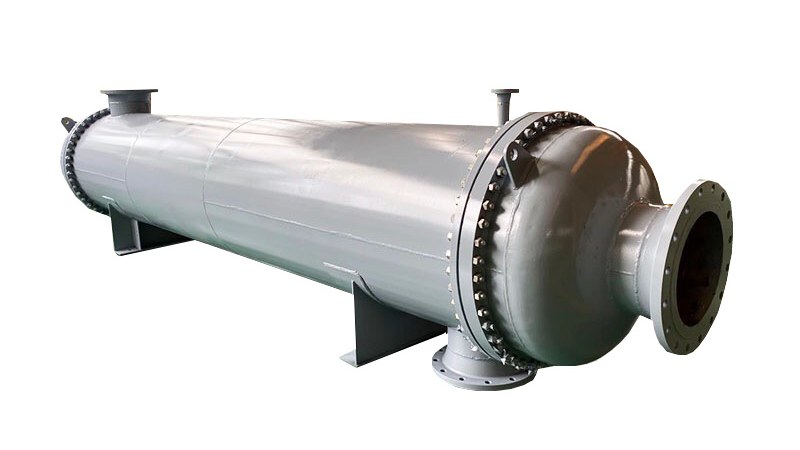
Deciding which fluid goes inside the tubes and which flows on the shell side is one of the first choices in a shell-and-tube heat exchanger design. It affects the price, the materials, how the unit can be cleaned and how long it lasts. Buyers often leave the choice to the supplier, but the buyer usually knows things the supplier does not: which fluid fouls, which one is corrosive, how the plant cleans its equipment and what happens if the two fluids leak into each other.
This article sums up the rules of thumb engineers use, shows where they conflict, and lists what to tell a supplier so that the allocation in the quote is right for your plant. The product catalog on this site includes shell-and-tube heat exchangers in fixed tubesheet, U-tube, floating head and stuffing box designs. For a specific duty, send both fluids' data through the RFQ form.
1. The Usual Rules at a Glance
The table combines two widely used references: the fluid allocation rules in Sinnott's Coulson & Richardson's Chemical Engineering, Volume 6, and Andrew Sloley's column on picking the right side in Chemical Processing. Both stress that these are guidelines, not laws.
| Situation | Usual side | Why |
|---|---|---|
| Higher pressure | Tube side | Small-diameter tubes take high pressure with less metal than a large shell, so high-pressure tubes are cheaper than a high-pressure shell |
| Corrosive fluid | Tube side | Only the tubes, tubesheets, channels and heads need the expensive alloy; a corrosive fluid in the shell means alloy for the whole exchanger |
| Fouling fluid | Tube side | Straight tubes are easier to clean than the shell side, and tube velocity can be kept high, which reduces fouling |
| High temperature | Tube side | If the temperature calls for special alloys, less alloy is needed; at moderate temperatures, a cooler shell needs less insulation |
| Vapour | Shell side | A vapour has a large volume and a low heat transfer coefficient; the shell side gives more flow area and less pressure drop |
| Condensing fluid | Shell side, most often | Needs care with mixtures that condense over a wide temperature range |
| Viscous liquid | Shell side, if the flow is turbulent | Baffles create turbulence at low Reynolds numbers; Sinnott puts the turbulent limit on the shell side at around Re 200 |
| Lower flow rate | Shell side | Sinnott notes this normally gives the most economical design |
Cooling water is the classic example. It fouls and can be corrosive, so it normally goes in the tubes, where the tubes can be cleaned and made of a better material without making the whole exchanger expensive.
2. Pressure Drop: Where the References Disagree
On pressure drop the two references point in different directions. Sinnott writes that, for the same pressure drop, the tube side gives a higher heat transfer coefficient, so the fluid with the lowest allowable pressure drop should go in the tubes. Sloley writes that a low-pressure-drop fluid should go on the shell side, because baffle cut, spacing and type can be chosen to meet almost any pressure drop limit, and that services under vacuum are almost always on the shell side.
The practical lesson: when the allowable pressure drop drives the design, there is no rule that settles it. Ask the supplier to rate both allocations and compare area, pressure drop and price.
3. The Construction Type Changes the Answer
The rules above assume both sides can be cleaned. That depends on how the exchanger is built.
| Construction | Effect on allocation |
|---|---|
| Fixed tubesheet | The bundle cannot be pulled, so the shell side cannot be cleaned mechanically. Sloley: a fixed tubesheet mandates a clean fluid on the shell side, unless the fouling is easily removed chemically. A large temperature difference between shell and tubes may also need an expansion joint |
| U-tube | The bundle can be pulled, so the shell side can be cleaned. The inside of U-tubes is harder to clean than straight tubes, so a fouling fluid sometimes goes on the shell side, with measures such as helical baffles |
| Floating head | Both sides can be cleaned and the bundle can be pulled, at a higher cost |
So the allocation and the construction should be decided together. If your plant can only clean by chemical circulation, say so; if it can hydro-jet tubes but has no space to pull a bundle, say that too.
4. When the Rules Conflict
Real duties often send two rules in opposite directions. Some common cases:
- High-pressure clean fluid against low-pressure fouling water. Pressure says the clean fluid goes in the tubes; fouling says the water does. The answer depends on how high the pressure is, how fast the water fouls and how the unit will be cleaned.
- Viscous fluid that also fouls. The shell side gives better heat transfer, but cleaning it needs a removable bundle and a tube layout that allows cleaning lanes. Sloley also warns that a high shell-side pressure drop can cause flow bypassing around the baffles and tube vibration.
- Fluid that may solidify. Sloley suggests avoiding a shell-and-tube unit if the risk of solidification is high. If one must be used, putting that fluid in the tubes means a blocked bundle can be pulled and replaced.
When the case is not clear, ask the supplier to price and rate both allocations. The difference in area and cost is often smaller than expected, and seeing both options makes the trade-off visible.
5. Two Common Cases
Steam heaters. Condensing steam usually goes on the shell side, with the process fluid in the tubes. The shell side then needs good condensate drainage and a vent for non-condensable gases. For the condensate and stall issues that apply to every steam heater, see our guide to plate heat exchangers in steam service.
Water-cooled coolers. Cooling water goes in the tubes and the process fluid on the shell side. With seawater, the tube material becomes the main decision; see the marine and seawater heat exchanger checklist.
6. If the Two Fluids Must Never Mix
Allocation alone does not stop a leak. If one fluid must never enter the other, for example because they react or because a product must not be contaminated, discuss it with the supplier at the start. Two common measures are a double tubesheet and a pressure rule. A double tubesheet lets a leak at the tube-to-tubesheet joints escape to the outside instead of into the other fluid; it does not help if a tube wall itself fails, so also ask the supplier how it handles that case, for example through tube material, wall thickness, leak testing and inspection. Keeping the more critical fluid at a higher pressure means that any leak, including one through a tube wall, flows away from it.
7. What to Tell the Supplier
| For each fluid | Why it matters |
|---|---|
| Operating and design pressure | Decides which side needs the pressure rating |
| Operating and design temperature | Decides materials, insulation and thermal expansion |
| Flow rate and allowable pressure drop | Decides velocities and the baffle design |
| Fouling tendency, solids and fouling factor if known | Decides which side must be cleanable |
| Corrosive components, for example chlorides, H2S or acids | Decides which side needs the alloy |
| Viscosity across the temperature range | Decides whether shell-side turbulence is possible |
| Phase change | Condensing or boiling, and over what temperature range |
| Cleaning method on site | Mechanical, hydro-jetting or chemical, and space to pull a bundle |
| Consequence of a leak | Whether a double tubesheet or a pressure rule is needed |
Ask the supplier to state on the datasheet which fluid goes on which side and why, and to note any rule it chose to break. See also what data to send before a heat exchanger quote and the shell-and-tube manufacturer checklist.
8. What This Means for Buyers
Most allocation choices follow a few simple rules: pressure, corrosion and fouling usually push a fluid into the tubes, while vapours, condensing fluids, viscous liquids and low flow rates usually go on the shell side. The construction type and the cleaning methods available on site can change that answer, and some rules, such as the one on pressure drop, depend on the specific design. A supplier that explains its allocation in writing, and rates the alternative when the case is close, is easier to work with than one that simply fills in a datasheet.
Sources and Related Pages
- Andrew Sloley, "Shell-and-Tube Heat Exchanger: Pick the Right Side", Chemical Processing, 2013: https://www.chemicalprocessing.com/processing-equipment/fluid-handling/article/11340603/shell-and-tube-heat-exchanger-pick-the-right-side-chemical-processing
- R. K. Sinnott, Coulson & Richardson's Chemical Engineering, Volume 6: Chemical Engineering Design, section on fluid allocation (shell or tubes)
- HeatEx Direct shell-and-tube heat exchangers: https://heatexdirect.com/products/siping-viex-heat-exchange-equipment-co-ltd/tubular-heat-exchanger
- HeatEx Direct plate vs. shell-and-tube selection guide: https://heatexdirect.com/industry-news/posts/plate-heat-exchanger-vs-shell-and-tube-selection-guide