
How to choose a Chinese shell and tube heat exchanger manufacturer? Standards, Materials, Inspection and Quotation List
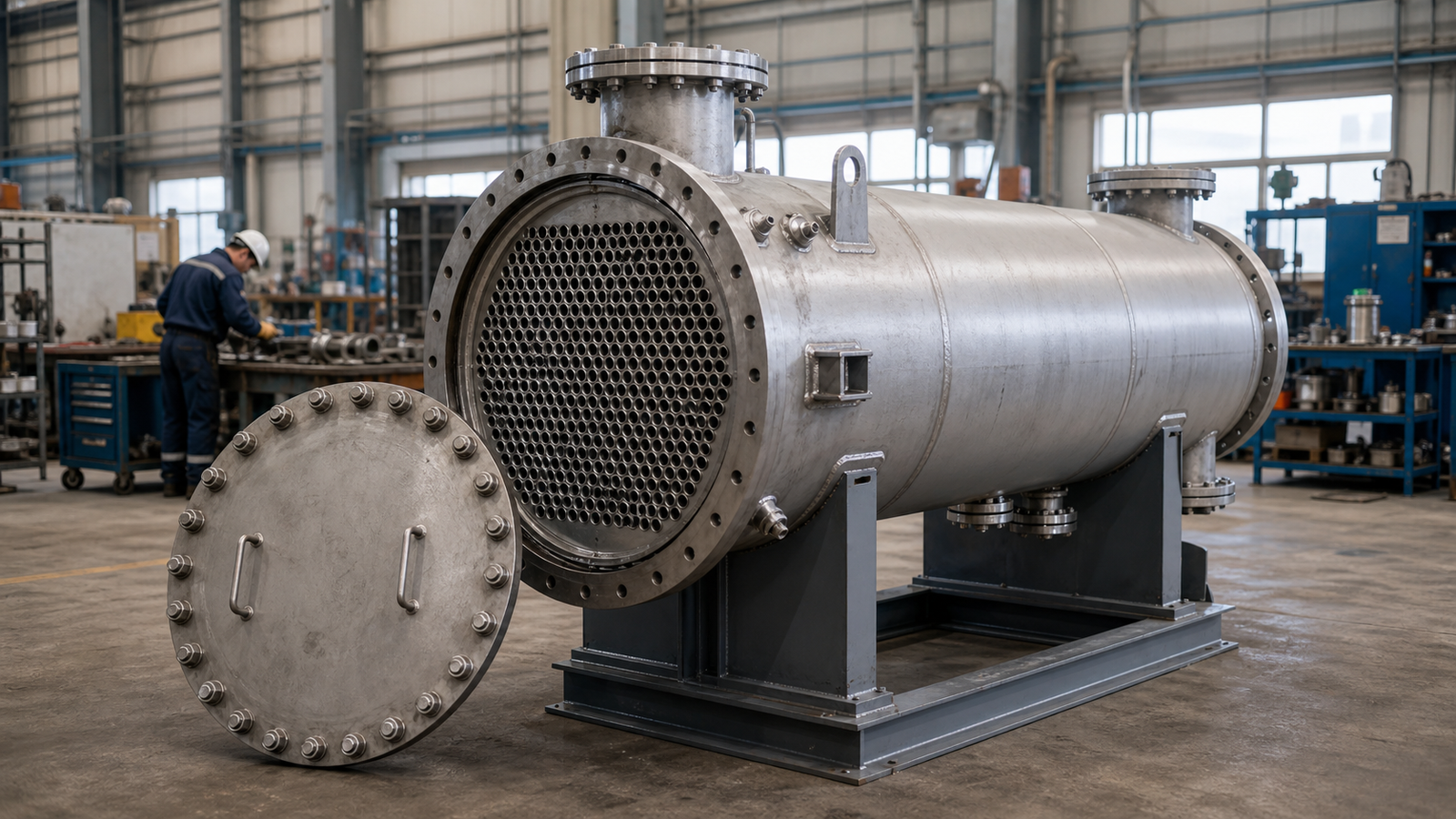
Shell and tube heat exchangers are one of the most established heat exchanger types used in petroleum, chemical, energy, pharmaceutical, utility and offshore systems. Its advantage is not minimum size but engineering customizability and pressure vessel adaptability. When purchasing Chinese shell and tube heat exchangers, in addition to asking "how much does it cost per square meter", buyers can also confirm that the manufacturer understands the structural type, ASME or other pressure vessel requirements, material combinations, tube-sheet connections, non-destructive testing and document delivery.
The tube-shell heat exchanger and tube-plate-shell heat exchanger in the site can be used as product entrances. If the project is in the petroleum, petrochemical or natural gas industry, it is better for the purchaser to spell out mechanical design, material selection, manufacturing, inspection, testing and shipment preparation requirements in advance.
1. First confirm the applicable standards
Standard boundaries for shell and tube equipment are clearer than for many plate equipment. ASME BPVC Section VIII Division 1 discloses its application to pressure vessels with internal or external pressures exceeding 15 psig and covers design, manufacturing, inspection, testing, and certification. The purchaser can also specify the structural type, shell and pipe process allocation, inspection scope, installation, operation and maintenance requirements and specification table fields in the project specifications.
| Project Requirements | Purchaser should confirm |
|---|---|
| ASME | U Stamp required, design pressure, materials and welding requirements |
| Project specifications | Structural type, shell-side and tube-side assignment, specification sheets and document requirements |
| Local regulations | Project national pressure vessel registration and inspection requirements |
| Third Party Inspection | Is Lloyd's, BV, TUV or customer witness required |
2. Tube sheets and tube bundles are the core of quality
The long-term reliability of shell and tube heat exchangers often depends on tubesheet processing, tube connections, baffles, tube bundle supports and shell side distribution. Suppliers can explain whether the pipes and tube sheets are expanded, welded, strength welded and expanded, or other methods; they can also explain the baffle spacing, the risk of tube bundle vibration, cleaning space and core pulling methods. For corrosive media, it is also necessary to confirm the pipe, tube plate material, surfacing or composite plate plan.
The purchaser can look at more than just the total square footage. Under the same area, different pipe diameters, pipe lengths, number of pipe passes, shell diameters and baffle designs will produce different pressure drops, vibration risks and cleaning difficulties. Professional suppliers can usually explain why a certain structural type was chosen, rather than just quoting a "standard model".
3. Material selection should be considered together with media allocation.
Shell-and-tube equipment allows for the use of different materials on both sides, which is both an advantage and a risk. How the more corrosive, higher pressure, easier to clean or dirtier side is assigned to the tube or shell side needs to be explained by the supplier. The purchaser can provide media composition, corrosion data, chloride ions, sulfides, solid particles, operating temperature, cleaning agents and design life requirements.
| Material Issues | Why It Matters |
|---|---|
| Are pipe and shell materials the same | Cost and corrosion boundaries are different |
| Whether corrosion allowance is required | Affects thickness, weight and life |
| Whether lining or surfacing is required | Affects manufacturing difficulty and inspection |
| Whether there is galvanic corrosion | Caution is required when combining dissimilar metals |
| Is material traceability required | Impact on MTC and third-party inspection |
4. Inspections and tests can be written more specifically
The quotation document should specify NDE items, pressure test, air tightness test, leakage test, dimensional inspection, material certificate, welding records, heat treatment, coating inspection and factory documentation. For shell and tube projects, the supplier delivers not only equipment, but also a complete set of technical documents.
For critical projects, it is recommended that suppliers submit an ITP inspection pilot plan. The ITP should indicate which points are manufacturer self-inspections, which points are customer witnesses, and which points are third-party witnesses. Otherwise, the meaning of "passed inspection" varies greatly between different suppliers.
5. Quotation comparison depends on the deviation table
Quotes for shell and tube heat exchangers often have technical deviations. One supplier may design to ASME but not offer U Stamps; another may meet U Stamps but have longer lead times; and a third may switch to alternative materials or different construction styles. The purchaser can require all suppliers to fill in a deviation form and list items that do not meet the inquiry information. Low price quote without deviation table, more clarification needed later.
6. On-site maintenance and core pulling space must be confirmed in advance
Subsequent maintenance of shell and tube heat exchangers often involves tube bundle extraction, mechanical cleaning, tube plugging, gasket replacement and shell side inspection. The purchaser can provide installation space and maintenance directions. If the equipment cannot pump out the pipe bundle after installation, subsequent maintenance costs will increase significantly. For replacement projects, the old equipment outline drawing, nozzle direction, foundation dimensions and on-site photos can be provided.
7. Procurement Conclusion
When choosing a Chinese shell and tube heat exchanger manufacturer, focus on standard understanding, pressure vessel qualifications, material traceability, welding and inspection capabilities, document delivery, and similar industry experience. The price is just the result, what really needs to be compared is whether the design boundaries are consistent. You can submit datasheet, P&ID and project specifications through Inquiry Form, and let the platform help sort out the requirements and transfer them to a more suitable shell-and-tube supplier.
7. The audit of shell and tube suppliers depends on the manufacturing process
The procurement focus of shell and tube heat exchangers is not only thermal calculations, but also mechanical design, materials, welding, expansion joints, non-destructive testing, pressure testing, tube sheets, baffles, shells, nozzles and documentation packages. ASME BPVC Section VIII Division 1 relates to the design and manufacture of pressure vessels, and project specifications further define the structure, inspection, documentation and delivery scope. The purchaser does not need to become a standards expert himself, but it needs to confirm whether the supplier knows what standards the project should follow and can translate the standard requirements into drawings, inspections and documents.
During the audit, the supplier can be asked to describe past experience in manufacturing similar equipment while respecting customer confidentiality. It is more practical to ask for a catalog of sample documents such as general drawings, summaries of thermal calculations, material certificates, welding documents, NDE reports, hydrostatic test reports, paint packaging instructions, operation and maintenance manuals. Suppliers who can clearly explain the package of documents usually also have a better understanding of the project delivery process.
8. Technical boundaries of shell-and-tube inquiry
Shell-and-tube quotes are most prone to scope differences. Whether expansion joints, bearings, insulation, painting, spare parts, third-party inspections, special packaging, lifting lugs, nameplates and import documents are included will all affect the price. The purchaser can list the scope during the inquiry stage, otherwise the supplier may quote based on the minimum scope and increase the cost later. For overseas projects, you can also specify the destination port, packaging standards, document language and whether origin or commodity inspection-related documents are required.
If the case is incomplete early on, you can first send the existing fields of your own datasheet. At least the media on both sides, flow rate, inlet and outlet temperatures, pressure, allowable pressure drop, material restrictions, design standards and quantities must be stated. For steam, condensation, gas cooling or high pressure systems, phase change, corrosion, vibration and cleaning requirements should be clearly stated. The manufacturing cycle of shell and tube equipment is usually affected by materials, tubes, inspection and document confirmation, and procurement plans can include technical clarification time.
Data sources and site links
- ASME BPVC Section VIII Division 1: https://www.asme.org/codes-standards/find-codes-standards/bpvc-viii-1-bpvc-section-viii-rules-construction-pressure-vessels-division-1
- Shell and tube heat exchanger: https://heatexdirect.com/products/siping-viex-heat-exchange-equipment-co-ltd/tubular-heat-exchanger
- Tube plate and shell heat exchanger: https://heatexdirect.com/products/siping-juyuan-hanyang-plate-heat-exchanger-co-ltd/plate-tube-shell-heat-exchanger