
Marine and Seawater Heat Exchanger Materials and Corrosion Purchasing Checklist: Copper Nickel, Titanium, Duplex Steel and Filtration Maintenance
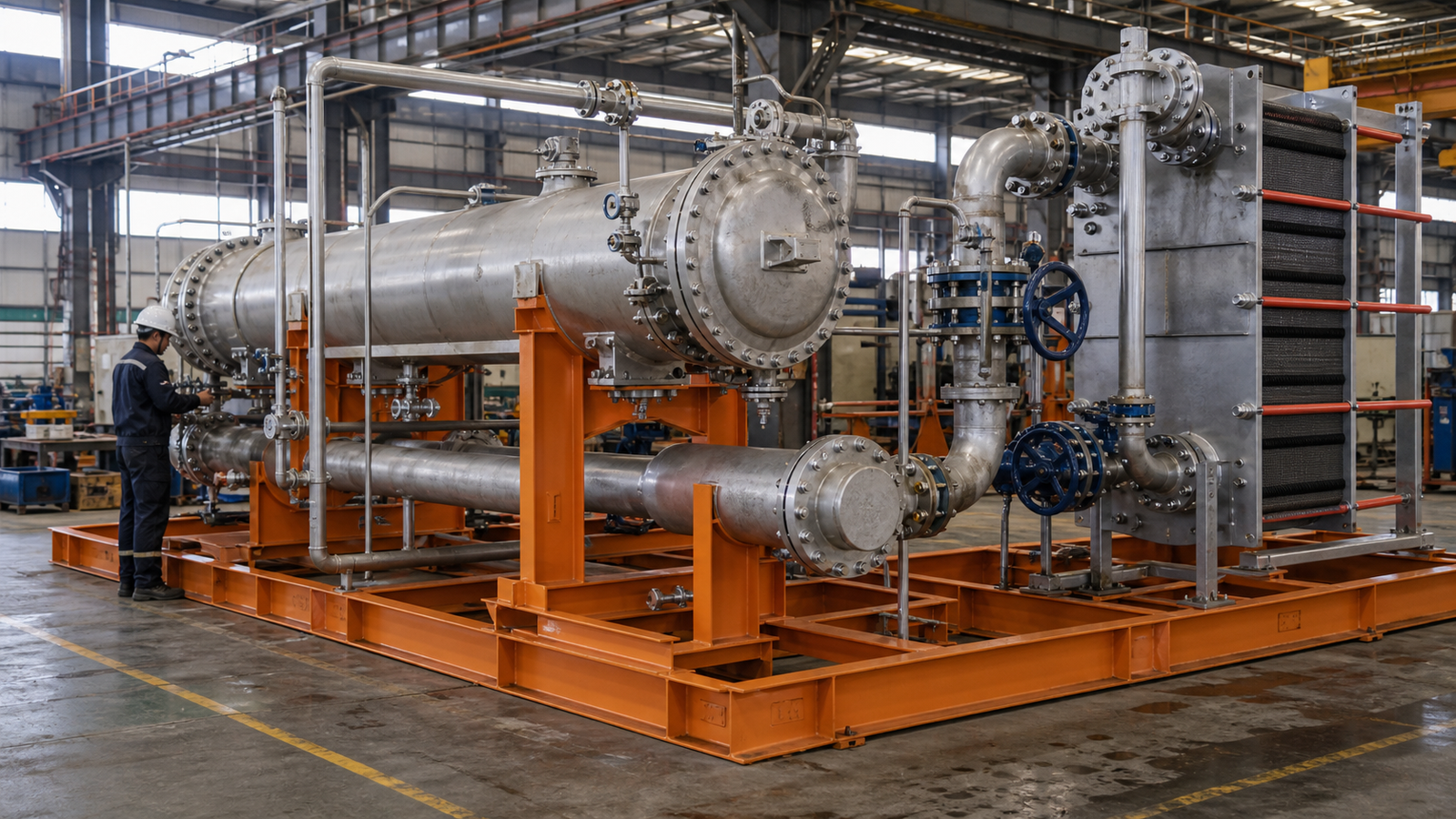
When purchasing seawater heat exchangers, it is recommended to consider the heat exchange area, materials and operating boundaries at the same time. Chloride ions, dissolved oxygen, contaminants, sediment, biofouling, stagnant water, flow rates and dissimilar metal combinations in seawater all affect corrosion and longevity. For heat exchangers on ships, offshore platforms, desalination, seaside factories and port facilities, material selection and operation and maintenance are often more important than the initial price.
You can view the site from Product Catalog Detachable plate heat exchanger, Wide gap welded plate heat exchanger and Shell and tube heat exchanger and other products. If the project involves seawater or high-chloride cooling water, it is recommended to clearly write out the seawater conditions, filtration, material preferences and commissioning requirements in the Inquiry Form.
1. Seawater working conditions must be described clearly first
The purchaser is recommended to at least state the source of seawater, temperature range, chloride ions, sediment, whether it contains pollutants, whether there is biological adhesion, filtration accuracy, design flow rate, whether it is shut down for a long time, whether it is drained regularly, whether cathodic protection is used, and whether the equipment is installed on a ship or shore-based. Without this data, suppliers can only recommend materials based on experience, which is very risky.
| Data Item | Why It Matters |
|---|---|
| Seawater temperature | Affects corrosion and heat transfer |
| Stagnation time | Stagnant seawater may increase the risk of localized corrosion |
| Filtration | Reduce tube/channel clogging and abrasion |
| Flow rate | If it is too low, it will easily deposit; if it is too high, it may erode the protective film |
| Material combinations | Dissimilar metals may form galvanic corrosion |
| Debugging method | Initial protective film formation depends on water quality and operating conditions |
2. Value and boundaries of copper-nickel alloy
The Nickel Institute's information on the corrosion resistance of copper-nickel alloys states that 90-10 and 70-30 copper-nickel alloys rely on a protective surface film formed with seawater to maintain corrosion resistance. Initial contact with clean, oxygenated seawater is important for the formation of a high-quality film. Information from the Copper Development Association also states that the water side of copper alloy pipes needs to form a protective layer in clean, oxygenated seawater, emphasizing that chlorine-containing, contaminated water or solid particles may cause corrosion problems under adverse conditions.
This illustrates that copper-nickel is not a material that “never corrodes,” but rather a material that requires proper commissioning, flow rate control, and water quality management. The purchaser should ask the supplier for recommended grades, flow rate range, filtration, debugging, shutdown drainage and dissimilar metal connection methods.
3. Titanium and stainless steel are not a panacea answer
Titanium has strong corrosion resistance advantages in many seawater heat exchange projects, but attention should be paid to the galvanic effects when combined with copper alloys, carbon steel or other materials. Material selection materials from the Copper Development Association mention that filters are used to reduce problems that can cause blockage and fouling of heat exchange tubes, and also discuss galvanic corrosion issues when titanium tubes are combined with copper-based alloy water chambers and tube sheets. Duplex stainless steel, super duplex steel and high-nickel alloys also require judgment based on temperature, chloride ions, gaps, welding and cost.
4. Filtration and maintenance are part of material selection
Filters, basket filters, backwash filtration, cleaning interfaces and drainage designs in seawater systems are not optional accessories. Silt, shellfish, algae, plastic debris and biofouling can clog pipe or slab channels. If you choose the wrong filter, expensive materials will not ensure stable operation of the equipment. The purchaser should ask the supplier whether it recommends pre-filtration, whether it needs to be detachable for inspection, whether it can be chemically cleaned, and whether anti-biological adhesion measures are needed.
5. Seawater concerns of different heat exchanger types
| Type | Focus |
|---|---|
| Shell and tube seawater cooler | Pipes, tube sheets, water chambers, filtration, mechanical cleaning |
| Plate heat exchanger | Plate materials, gaskets, plate opening cleaning, chloride ions |
| Brazed Plate Type | Materials and Non-Removable Cleaning Risks |
| Welded Plate | Welds, Materials, CIP, Channel Blocking |
| Air-side alternatives | If seawater maintenance costs are high, evaluate air cooling |
6. Questions suitable for suppliers to answer
The purchaser can ask the supplier to answer: why the material is recommended, whether there are similar seawater working conditions, what are the filtration requirements, how to debug and shut down, whether there is a risk of dissimilar metal galvanic couples, how to judge the cleaning cycle, how to provide material certificates and pressure tests, and whether maintenance instructions can be provided. If a supplier only says "titanium is best" or "316L is enough" but cannot explain the boundaries, more technical clarification will be needed later.
7. Procurement Conclusion
The key to purchasing seawater heat exchangers is to judge material selection, system filtration, commissioning, shutdown, cleaning and supplier experience together. Copper-nickel, titanium, duplex steel, or other materials may all be suitable for certain scenarios, or they may cause problems with the wrong water quality, stagnation, flow rates, or material combinations. Submitting seawater conditions and project boundaries through Inquiry Form can help suppliers give more accurate material and structural recommendations.
7. It is recommended to write down the specific corrosion conditions for seawater projects
Corrosion risks in seawater systems come from factors such as chloride ions, biological adhesion, flow rate, temperature, sand content, contaminants, stagnant water and galvanic corrosion. Just writing "seawater" or "marine use" is usually not enough information. The purchaser can specify whether it is open seawater, closed cooling, ship central cooling, seawater desalination, near-shore water intake, or aquaculture/industrial seawater system; it can also explain the seawater temperature, sand content, whether it is filtered, whether it is cleaned regularly, and whether it is shut down for long-term water storage. Under different conditions, material and structure selection will be significantly different.
Both the Nickel Institute and the Copper Development Association have published information on material selection for copper-nickel alloys and seawater systems. The purchaser can use this information as a background for material discussions, but specific materials must still be confirmed by project specifications, working conditions, and supplier engineering judgment. Common discussions include titanium, copper-nickel, stainless steel, duplex steel, coatings or non-metallic parts, etc., but cannot be determined in isolation from temperature, flow rate, contamination and cost.
8. Ask the supplier to explain the boundaries of anti-corrosion when making inquiries.
Seawater heat exchanger suppliers can describe recommended materials, applicable assumptions, cleaning methods, filtration requirements, allowable flow rate or pressure drop assumptions, whether sacrificial anodes are required, whether there is a risk of galvanic corrosion, outage maintenance recommendations and spare parts options. For gasketed plate types, gasket materials and plate materials must also be confirmed; for shell and tube types, pipes, tube sheets, shells, coatings and connections must be confirmed; for welded plate type or wide channel equipment, cleaning and clogging risks must be confirmed.
9. Submit on-site photos and water quality information together
Saltwater projects are highly dependent on site conditions. If replacing old equipment, it is recommended to upload photos, nameplates, corrosion locations, leakage locations, cleaning records and water quality analysis of the old equipment. If it is a new project, it is recommended to upload the flow diagram, installation location, filtration scheme and material specifications. Additional instructions on the inquiry form can be written: "Please list the basis for material selection, anti-corrosion assumptions, cleaning and maintenance recommendations and non-applicable conditions." This will make suppliers respond more cautiously, and can also help purchasers identify quotes that only provide general promises.
10. Write down material suggestions and responsibility boundaries clearly
Seawater heat exchanger material selection often involves supplier recommendations, design institute specifications, classification societies or owner requirements. The purchaser should avoid making the sentence "the supplier is responsible for the suitability of materials" too general. A clearer way is: the purchaser provides water quality, temperature, flow rate, filtration, operation mode and project specifications; the supplier makes material suggestions and non-applicable conditions based on these data; the final material is confirmed by the technical party and written into the order. This will make the boundaries of responsibilities clearer and avoid suppliers from over-promising when there is insufficient information.
The quoting stage can also ask the supplier to list maintenance assumptions. Examples include whether regular flushing is required, whether stagnant water needs to be prevented, whether biofouling needs to be removed, whether backup gaskets or tube bundle inspection intervals are recommended. For ships or offshore projects, transportation vibration, salt spray environment, packaging protection and spare parts acquisition also need to be factored into the procurement judgment. The true cost of seawater equipment is not just the price of the equipment, but also long-term corrosion control and downtime risks.
Data sources and site links
- Nickel Institute Seawater corrosion resistance information of copper-nickel alloys: https://nickelinstitute.org/en/nickel-applications/copper-nickel-alloys/corrosion-resistance-of-copper-nickel-alloys/
- Copper Development Association Seawater heat exchanger commissioning, shutdown and operation information: https://www.copper.org/applications/marine/cuni/applications/seawater_system_design/heat_exchangers_piping/heat_exchangers_and_piping.html
- Copper Development Association Seawater system material selection information: https://www.copper.org/applications/marine/cuni/applications/seawater_system_design/materials_selection.html
- HeatEx Direct removable plate heat exchanger: https://heatexdirect.com/products/shanghai-heat-transfer-equipment-co-ltd/gasketed-plate-heat-exchanger
- HeatEx Direct wide gap welded plate heat exchanger: https://heatexdirect.com/products/shanghai-heat-transfer-equipment-co-ltd/wide-gap-welded-plate-heat-exchanger
- HeatEx Direct shell and tube heat exchanger: https://heatexdirect.com/products/siping-viex-heat-exchange-equipment-co-ltd/tubular-heat-exchanger