
Can a Plate Heat Exchanger Use Steam? Temperature Limits, Condensate Drainage and Stall
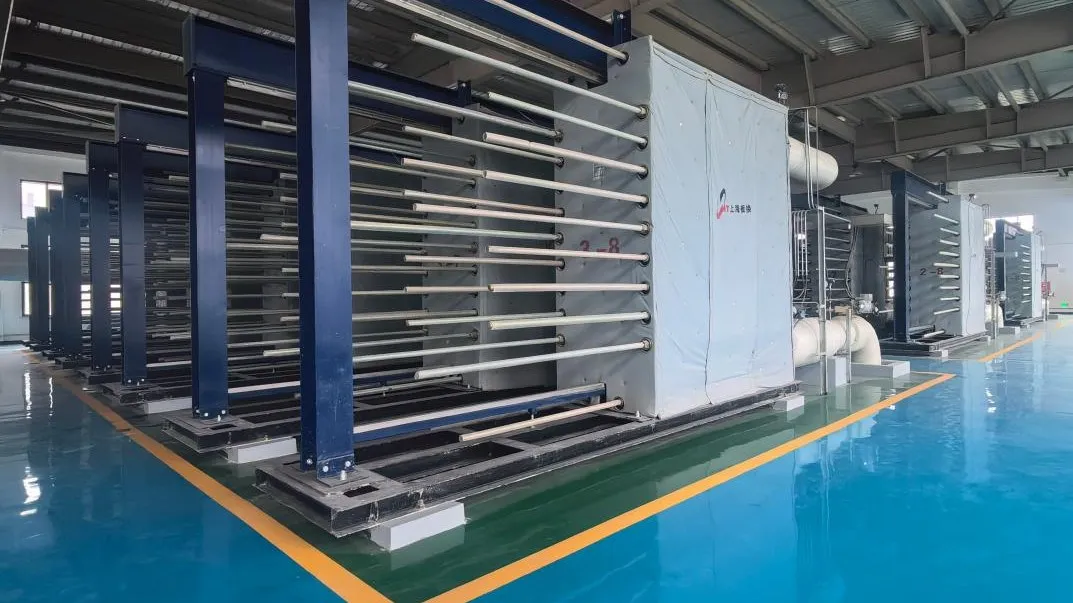
Yes, a plate heat exchanger can be heated with steam. Steam-to-water plate units are common in district heating substations, hot water systems, food and beverage plants and many process heating duties. But steam is less forgiving than a water-to-water duty. Three questions decide whether a plate unit is the right choice: can the sealing system take the steam temperature, can condensate leave the plates freely at every load, and how often does the load change?
This guide is for buyers and engineers who are considering a plate heat exchanger for steam and want to ask suppliers the right questions. The product catalog on this site includes gasketed plate heat exchangers, welded plate heat exchangers, plate-and-shell heat exchangers and shell-and-tube heat exchangers. For a specific duty, send your steam and condensate data through the RFQ form.
1. Start With the Steam Temperature
Saturated steam gets hotter as its pressure rises, so even "low-pressure" steam can be close to the limit of a gasket. The table gives saturation temperatures from the IAPWS-IF97 steam tables. Gauge pressure is about 1 bar lower than absolute pressure.
| Steam pressure, bar(a) | Approx. bar(g) | Saturation temperature |
|---|---|---|
| 2 | 1 | 120.2 °C |
| 4 | 3 | 143.6 °C |
| 6 | 5 | 158.8 °C |
| 8 | 7 | 170.4 °C |
| 10 | 9 | 179.9 °C |
Superheated steam is hotter than the saturation temperature at its pressure, so give the actual steam temperature as well as the pressure. Also state the highest pressure the steam side can see, for example if the control valve fails open, not only the normal operating pressure.
2. In a Gasketed Unit, the Gasket Sets the Limit
The plates of a gasketed plate heat exchanger are usually stainless steel and are rarely the limit in steam service. The gasket is. A gasket guide published by Heat Exchanger World gives NBR (nitrile) a range of about -10 °C to 110 °C and describes EPDM as the material for hot water and steam, with a range of about -10 °C to 150 °C. Steam-resistant EPDM grades go further: in 2006 Alfa Laval said its EPDMP gasket material let its plate heat exchangers operate at up to 180 °C, 20 °C more than its earlier gaskets. On this site, the gasketed plate heat exchanger from Shanghai Heat Transfer Equipment lists a design temperature of up to 180 °C, with NBR, HNBR, EPDM, H-EPDM and FKM gaskets available.
Two practical points follow. First, a gasket that runs close to its rated temperature ages faster than one with a margin, so ask for the expected gasket life at your operating temperature, not only the maximum rating. Second, ratings depend on the exact compound and the supplier, so the quote should name the gasket compound offered for the steam side and its temperature limit in steam.
3. Condensate Has to Leave the Plates
In a steam plate heat exchanger, steam enters through an upper port, condenses on the plates, and the condensate leaves through a lower port. Anything that holds condensate back floods part of the plate pack. Spirax Sarco names two main causes of this waterlogging: fitting the wrong type of steam trap, and stall. A flooded unit loses heat transfer area, its outlet temperature becomes hard to control, and water hammer and corrosion can follow.
Good practice on the condensate side:
- Use a trap that discharges condensate as soon as it forms. The arrangements Spirax Sarco describes for heat exchangers use float traps.
- Install the trap below the condensate outlet, so condensate reaches it by gravity.
- Do not lift condensate straight after the trap if the steam pressure in the exchanger can fall low.
- Size the condensate outlet and pipework for the highest condensate load, not only the normal one.
4. Stall: Why Steam Heaters Flood at Part Load
Most steam heat exchangers control the outlet temperature with a valve on the steam inlet. When the heat load falls, the valve closes and the pressure inside the exchanger drops. Spirax Sarco defines stall as the reduction or stop of condensate flow that occurs when the pressure in the heat exchanger is equal to or lower than the total backpressure on the steam trap. Condensate then backs up into the exchanger.
Stall is more likely when:
- the secondary fluid inlet temperature rises, or its flow falls, as the load drops;
- the outlet temperature set point is lowered;
- condensate has to be lifted or returned into a pressurised condensate line;
- the heat exchanger has more area than the duty needs. Spirax Sarco notes that because of safety factors and standard sizes, heat exchangers often have more heating area than required, which pushes the steam pressure down further at part load.
Spirax Sarco describes three basic ways to deal with stall:
| Approach | How it works | When it fits |
|---|---|---|
| Vacuum breaker and gravity drainage | A vacuum breaker after the control valve lets air in, so condensate drains by gravity to a float trap installed 0.5 to 1 m below the outlet and discharging to atmospheric pressure or a vented receiver | Condensate can fall freely to an open drain or a vented receiver |
| Pump-trap | A pressure-powered pump and float trap remove condensate even when the steam pressure is below the backpressure | Condensate must be lifted or returned to a pressurised line |
| Stable steam pressure | The temperature is controlled on the secondary side, so the steam space always stays above the backpressure | The process allows control on the water or product side |
The same rules apply to plate and tubular units. When you buy, settle who designs and supplies the control valve, trap set and condensate return: the heat exchanger supplier, a skid builder or your own contractor. Many quotes cover only the heat exchanger.
5. Thermal Cycling and Start-Up
Steam heats a cold plate pack very quickly. Large and frequent temperature swings stress gaskets, and in brazed plate heat exchangers they can fatigue the brazed joints over time. Where the process allows, open the steam valve slowly at start-up, avoid on-off control of the steam supply, and ask the supplier whether it sets limits on start-up rate or number of cycles. Tell the supplier how often the unit starts and stops: a hot water system that cycles many times a day is a different duty from a process heater that runs continuously.
6. Which Design for Which Steam Duty
| Design | Where it fits | What to check |
|---|---|---|
| Gasketed plate heat exchanger | Saturated low-pressure steam heating water or clean liquids, with the steam temperature inside the gasket rating | Gasket compound and life, steam port size, condensate drainage |
| Brazed plate heat exchanger | Small steam heaters and compact skids | Cannot be opened for cleaning; thermal cycling; brazing material compatible with both fluids |
| Welded plate heat exchanger (block type) | Higher temperatures and pressures where gaskets are not acceptable | Cleaning access, design pressure and temperature, inspection |
| Plate-and-shell heat exchanger | High pressure or high temperature in a compact unit | Which fluid goes on the shell side, cleaning method |
| Shell-and-tube heat exchanger | High-pressure or superheated steam, large loads, wide load swings or dirty condensate | Larger footprint and weight; usually a wider temperature approach than plates |
For reference, catalog data on this site lists up to 4.0 MPa and 400 °C for the HT-BLOC welded plate heat exchanger and up to 6.0 MPa and 580 °C for the Lanshi plate-and-shell heat exchanger. These are the limits of the product range; the rating of a given unit depends on its design and materials.
7. What to Send With a Steam RFQ
| Item | What to give |
|---|---|
| Steam pressure at the exchanger inlet | Minimum, normal and maximum, after the control valve |
| Steam condition | Saturated, or superheated with its temperature |
| Heat duty or steam flow | At design load and at minimum load |
| Secondary fluid | Fluid, flow rate, inlet and outlet temperatures |
| Condensate outlet | Backpressure, any lift after the trap, type of return system |
| Control method | Valve on the steam side, or control on the secondary side |
| Operating pattern | Continuous, or the number of starts and stops per day |
| Design data | Design pressure and temperature, and the code, for example PED or ASME |
| Scope | Heat exchanger only, or with control valve, trap set and skid |
The minimum load matters as much as the design load. A unit sized only for the peak may spend most of its life close to stall.
8. What This Means for Buyers
A plate heat exchanger makes a good steam heater when the steam temperature stays inside the gasket rating with a margin, condensate can drain at every load, and the load does not cycle on and off many times a day. When the steam pressure is higher, the steam is superheated, or the condensate system cannot be designed to avoid stall, a welded plate, plate-and-shell or shell-and-tube design is often the safer choice. Ask suppliers to state the steam-side limits of the unit they offer and to explain how condensate drainage was handled on similar projects. For help with a quote, see what data to send before a heat exchanger quote and the plate vs. shell-and-tube selection guide.
Sources and Related Pages
- Spirax Sarco, heat exchangers and stall: https://www.spiraxsarco.com/learn-about-steam/condensate-removal/heat-exchangers-and-stall
- Spirax Sarco, practical methods of preventing stall: https://www.spiraxsarco.com/learn-about-steam/condensate-removal/practical-methods-of-preventing-stall
- Spirax Sarco steam tables, dry saturated steam line: https://www.spiraxsarco.com/resources-and-design-tools/steam-tables/dry-saturated-steam-line
- Heat Exchanger World, guide to plate heat exchanger gaskets: https://heat-exchanger-world.com/?p=69916
- Process Engineering (2006), Alfa Laval EPDMP gaskets for up to 180 °C: https://processengineering.co.uk/article/1294851/enhanced-temperature-performance-takes-gaskets-to-new-levels
- HeatEx Direct gasketed plate heat exchangers: https://heatexdirect.com/products/shanghai-heat-transfer-equipment-co-ltd/gasketed-plate-heat-exchanger
- HeatEx Direct HT-BLOC welded plate heat exchangers: https://heatexdirect.com/products/shanghai-heat-transfer-equipment-co-ltd/ht-bloc-welded-plate-heat-exchanger
- HeatEx Direct shell-and-tube heat exchangers: https://heatexdirect.com/products/siping-viex-heat-exchange-equipment-co-ltd/tubular-heat-exchanger