
Heat exchanger inquiry list: What materials are recommended to be prepared before submitting a quotation request?
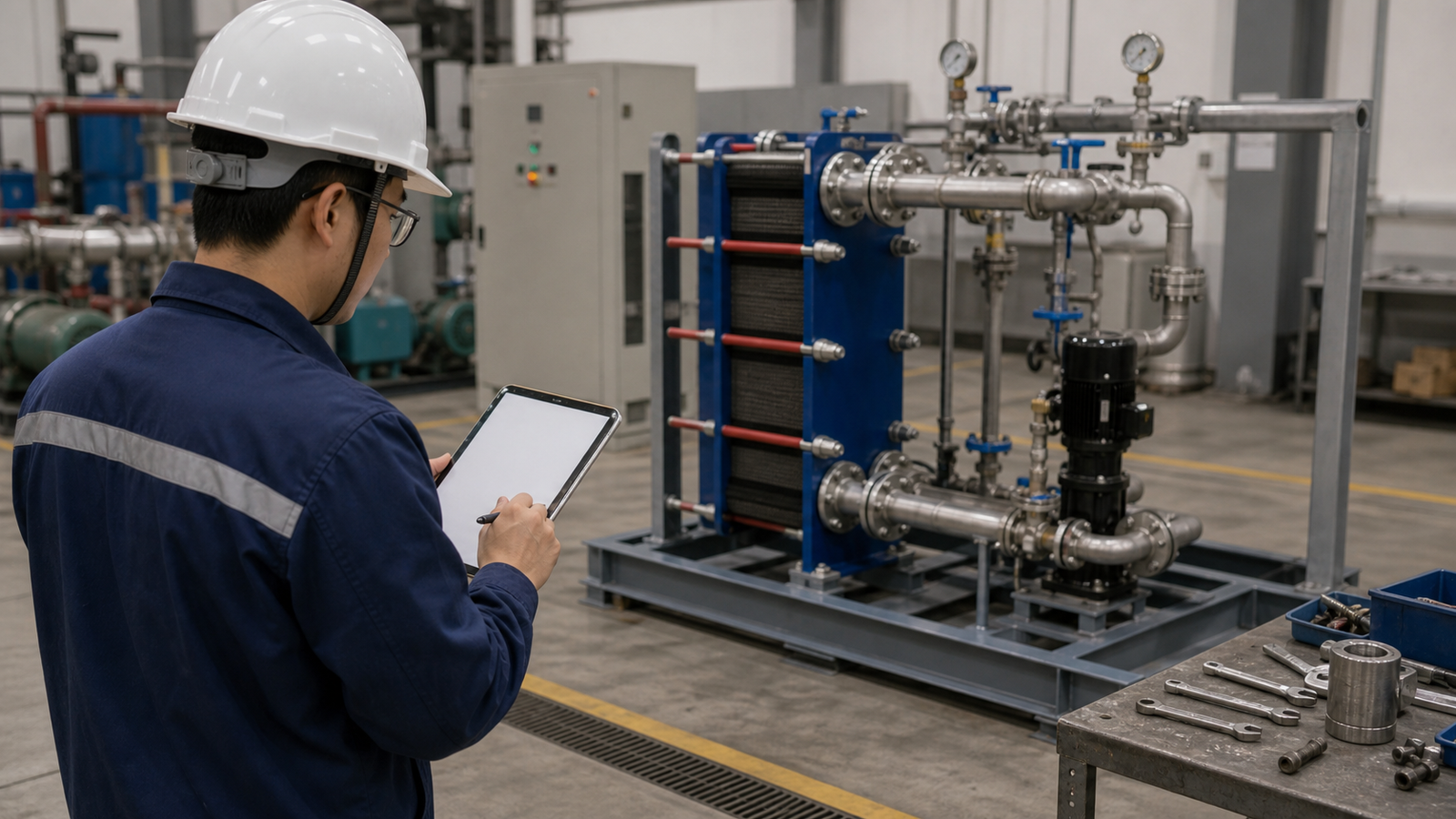
When overseas buyers inquire about heat exchangers, the most common problem is not that "the supplier cannot be found", but that the supplier receives too little information and can only give a broad quotation. Heat exchangers are not standard shelf products. For the same "plate heat exchanger" or "shell and tube heat exchanger", the design results will be completely different when the medium, temperature, pressure, pressure drop, corrosion, scaling, cleaning methods and certification requirements are different. If the purchaser only writes "need a 100 m2 heat exchanger" or "please submit 10 plate heat exchangers", it will be difficult for the supplier to determine the model, material, number of plates, gaskets, interfaces, inspection and delivery time. The result is often that the quotations are not comparable, or the low-price supplier first submits an incomplete plan and then adds additional fees later.
The purpose of this checklist is to help the purchaser transform the inquiry from "price inquiry" to "communication of engineering specifications." If you already have a process package, TEMA datasheet, P&ID, GA drawing or old equipment nameplate, you can submit it directly through Inquiry Form. If there is no complete document yet, you can first organize the key data according to the table in this article so that the supplier can determine the direction.
1. First explain the inquiry target
At the beginning of the procurement email, you can state the project goals first, and then put the detailed parameters. The goals usually include new projects, replacement of old equipment, capacity expansion and transformation, energy-saving transformation, fault replacement, spare parts procurement, supplier price comparison or prototype evaluation. This information affects how suppliers design. For example, when replacing old equipment, the interface size, installation space, foundation, pipe orifice direction, transportation size and shutdown window are often more important than the "optimal heat transfer area"; for new projects, life cycle costs and process adaptation are more important.
| Inquiry target | Additional explanations should be made | Impact on quotation |
|---|---|---|
| New project | Process package, design standards, project location, estimated production time | Suppliers can be selected from scratch, with greater quotation flexibility |
| Replace old equipment | Nameplate, old drawings, site photos, failure reasons | Need to match interfaces and installation boundaries |
| Energy-saving transformation | Current temperature difference, pressure drop, energy consumption, cleaning cycle | Need to compare the current situation and transformation benefits |
| Spare parts procurement | Original manufacturer, model, plate/gasket drawing number, quantity | Need to confirm compatibility and materials |
2. Thermal parameters are the core of quotation
The heat exchanger quotation must at least state the name of the medium on both hot and cold sides, mass flow or volume flow, inlet temperature, outlet target temperature, operating pressure and allowable pressure drop. Many buyers only provide heat load but not flow and temperature, which leaves suppliers unable to determine flow rate, pressure drop and scaling risk. It is recommended to organize these parameters into a specification sheet or inquiry attachment so that suppliers can make preliminary thermal and mechanical judgments based on the same set of boundaries.
| Parameters | Suggested information | What happens if missing |
|---|---|---|
| Medium name | Water, steam, oil, ethylene glycol, seawater, acid and alkali, slurry, etc. | Unable to determine the material and scaling risk |
| Phase state | Liquid, gas, condensation, evaporation, two phases | Unable to determine heat transfer model and safety margin |
| Flow rate | kg/h, m3/h, Nm3/h, and indicate the unit | The supplier cannot verify the flow rate and pressure drop |
| Temperature | Inlet, outlet or target heat load on both sides | Unable to determine area and end temperature difference |
| Pressure | Operating pressure, design pressure, test pressure | Unable to determine pressure vessel requirements |
| Allowable pressure drop | Maximum pressure drop on both sides | Will affect the channel, tube side and pump power |
3. Material and corrosion information cannot be supplied later.
Materials are not the last option to be decided, but the boundaries that need to be confirmed early in the quotation. Seawater, chloride ions, sulfides, acids and bases, particulate-containing slurries, food grade cleaning agents, and pharmaceutical process fluids will all change material selection. The public description of ASME BPVC Section VIII points out that its rules cover the design, manufacture, inspection, testing and certification of pressure vessels, and involve multiple types of materials and manufacturing methods such as welding, forging, and brazing. If the purchaser has ASME, PED, GB, NB/T, API, TEMA or third-party inspection requirements, it is recommended to state this at the beginning of the inquiry.
For removable plate heat exchanger, the applicable temperature of the plate material, gasket material and gasket is the key; for Brazed plate heat exchanger, the brazing material, cleanliness and maintainability need to be confirmed in advance; for Welded plate heat exchanger, welding seams, non-destructive testing and cleaning methods will directly affect the quotation.
4. On-site constraints determine whether the quotation is true
The equipment size given by the supplier is not only the result of thermal calculation, but also affected by the site space, pipe opening direction, maintenance access, lifting path, foundation load and transportation conditions. The purchaser can provide general layout drawings, on-site photos, maximum overall dimensions, interface flange standards, pipe mouth direction requirements, whether thermal insulation is required, and whether there are explosion-proof or outdoor requirements. For Heat Exchange Unit, you can also specify pumps, valves, instruments, control cabinets and power supply requirements; for air-side equipment, it is recommended to specify whether it is installed indoors, outdoors, on the roof, or in an air duct.
5. It is recommended to prepare the quotation attachments at one time
A high-quality inquiry attachment package can include: process parameter sheet, old equipment nameplate, P&ID, general arrangement drawing, nozzle table, material requirements, inspection requirements, project specifications, photos, target delivery date, and packaging and transportation requirements. When complete information is not available, you can also upload handwritten sketches or on-site photos, and indicate which data are confirmed and which are just estimates. Inquiry form supports uploading images, Word, Excel, PDF and CSV, and is suitable for submitting these materials together.
6. Questions suitable for suppliers to answer
In addition to price, the purchaser can also ask the supplier to explain the reasons for selection, material reasons, pressure drop estimates, cleaning methods, recommended spare parts, inspection items, warranty boundaries, delivery documents and similar project experience. The following set of questions is suitable to be placed at the end of the inquiry materials:
| Question | Why it matters |
|---|---|
| Why do you recommend this heat exchanger type? | Prevent suppliers from only promoting products they have in stock or are most familiar with |
| How to choose main materials and sealing materials? | Affects corrosion, temperature, longevity and food/pharmaceutical compliance |
| Can a summary of the thermal calculations be provided? | Facilitate comparison of different supplier solutions |
| How to determine the cleaning and maintenance cycles? | Impact on downtime costs |
| What do the delivery documents include? | Affect subsequent acceptance and installation |
| Are there any cases with similar working conditions? | Judge the supplier’s real experience |
7. How to judge whether the inquiry information is complete
An available inquiry document may not be perfect, but at least the supplier should be able to answer three questions: first, where does the heat come from and where does it go; second, what pressure, temperature, medium and corrosion does the equipment have to withstand; third, where should the equipment be installed, how should it be maintained, and what standards should it be accepted for acceptance. As long as these three questions are clear, the supplier can give a bounded technical quotation instead of a marketing quotation.
If you are still not sure whether to choose plate, shell and tube, welded plate or air heat exchanger, you can first browse Product Catalog and Manufacturer List, and then submit preliminary working conditions to HeatEx Direct. We will organize the inquiry based on the type of working conditions, industry and data completeness, and transfer the demand to a more suitable supplier.
9. How to use this list within the purchaser
This list is best confirmed by multiple relevant departments. Heat exchanger quotation usually affects process, equipment, procurement, quality and logistics at the same time. If any department misses information, the supplier may give a seemingly complete but actually unexecutable quotation. A more prudent approach is to first have the process or usage department confirm the heat load, medium, temperature, pressure and flow, then have the equipment department confirm the design pressure, design temperature, materials, interfaces, installation space and standard requirements, and finally have the procurement department uniformly send them to the supplier. The advantage of this is that the supplier can determine the selection direction the first time he responds, instead of repeatedly asking for basic parameters.
If you don’t have a complete datasheet yet, you can also sort it into three categories: “Confirmed, Suggested Supplements, and To Be Confirmed.” Confirmed items usually include product type, medium, temperature, pressure, flow rate, quantity, usage industry and delivery location; suggested supplementary items include materials, connection methods, design standards, cleaning and maintenance requirements and whether spare parts are needed; items to be confirmed can be stated as suggested by the supplier. For buyers, stating “uncertain” transparently is safer than filling in a random value, because suppliers can list assumptions in their quotes and subsequent technical clarifications are easier to track.
10. Comparison method after the inquiry is issued
After receiving the quotation, in addition to the total price, it is also recommended to compare the technical boundaries. The first step is to check whether the supplier quoted your original parameters and whether the thermal assumptions, material scope and exclusions are listed; the second step is to check whether the product boundaries are consistent, such as whether gaskets, spare parts, brackets, packaging, documents, inspection and freight are included; the third step is to check whether the delivery time starts after the drawing is confirmed or when the order takes effect. Many of the differences in quotes are not differences in manufacturing costs, but differences in scope.
It is recommended that you organize the responses from each supplier into the same table: equipment model, heat exchange area, design pressure, design temperature, main materials, interface size, quantity, standards, document package, payment terms, delivery date and deviation instructions. Price only makes sense if the items are comparable. In the additional instructions on the inquiry form, suppliers can be asked to "list all technical assumptions and commercial exclusions", which will make subsequent screening faster and reduce low-priced but incomplete quotes from entering the next round.
Data sources and site links
- TEMA Heat Exchanger Specification Sheet: https://support.tema.org/images/TEMA_USC_DataSheet.pdf
- ASME BPVC Section VIII Division 1: https://www.asme.org/codes-standards/find-codes-standards/bpvc-viii-1-bpvc-section-viii-rules-construction-pressure-vessels-division-1
- HeatEx Direct removable plate heat exchanger: https://heatexdirect.com/products/shanghai-heat-transfer-equipment-co-ltd/gasketed-plate-heat-exchanger
- HeatEx Direct brazed plate heat exchanger: https://heatexdirect.com/products/siping-juyuan-hanyang-plate-heat-exchanger-co-ltd/brazed-plate-heat-exchanger
- HeatEx Direct welded plate heat exchanger: https://heatexdirect.com/products/shanghai-heat-transfer-equipment-co-ltd/tp-welded-plate-heat-exchanger
- HeatEx Direct heat exchanger unit: https://heatexdirect.com/products/lanzhou-lanshi-heat-exchange-equipment-co-ltd/plate-heat-exchanger-unit
- HeatEx Direct shell and tube heat exchanger: https://heatexdirect.com/products/siping-viex-heat-exchange-equipment-co-ltd/tubular-heat-exchanger
- HeatEx Direct air heat exchanger: https://heatexdirect.com/products/siping-viex-heat-exchange-equipment-co-ltd/air-heat-exchanger