
Heat Recovery From Flue Gas and Process Exhaust: How to Choose the Heat Exchanger
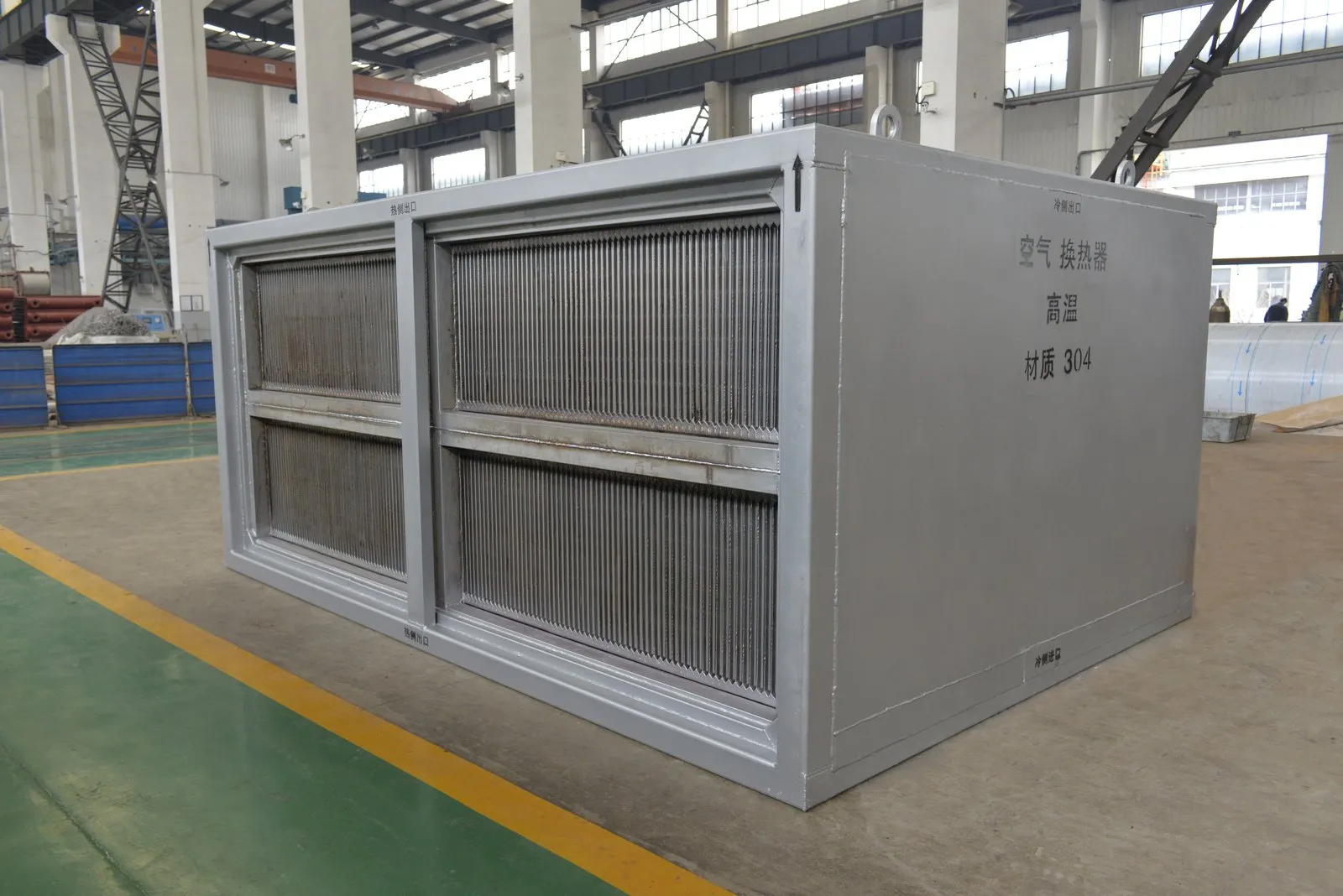
Boilers, furnaces, kilns and dryers send large amounts of heat up the stack. Recovering it is often one of the cheapest energy projects in a plant. The U.S. Department of Energy (DOE) puts it simply in its steam tip sheet on economizers: boiler efficiency generally rises by 1% for every 40 °F (about 22 °C) reduction in flue gas temperature, and an economizer can often cut fuel use by 5% to 10% and pay for itself in less than two years.
Projects fail, however, when the heat exchanger does not suit the gas. Acid condensation, dust and pressure drop are the usual causes. This guide explains how to choose the heat exchanger and what data suppliers need. Two recent cases from Accessen show the range: flue gas heat recovery for district heating at the Huaneng Changchun CHP plant, and heat recovery from dusty dryer exhaust at Solbar Ningbo Protein.
1. Start With Where the Heat Will Go
A heat recovery project needs a heat sink as much as a heat source. Before choosing equipment, decide what the recovered heat will warm, and check that the demand exists when the hot gas is available.
| Heat sink | Typical equipment | Example |
|---|---|---|
| Combustion air | Air preheater (gas-to-air) | Boilers, furnaces, kilns |
| Process or dryer intake air | Gas-to-gas heat exchanger | Dryers in food, chemicals, textiles |
| Boiler feedwater or makeup water | Economizer (gas-to-water) | Steam boilers |
| Condensate, district heating or process water | Economizer plus an intermediate water loop and a water-to-water heat exchanger | CHP plants, district heating |
| Low-temperature water (below the dew point) | Condensing economizer | Gas-fired boilers with a large cold water demand |
The DOE's tip sheet on condensing economizers lists the first steps: determine the boiler's capacity, stack temperature and operating hours, then identify the in-plant uses for heated water, such as boiler makeup water, process water or domestic hot water.
An intermediate loop, as at Huaneng Changchun, adds a heat exchanger but brings two advantages: the flue gas side is separated from high-pressure feedwater or the heating network, and the recovered heat can be switched between users. There, heat medium water at about 70 °C cools the flue gas from 120–150 °C to 85–100 °C, and plate-and-shell heat exchangers pass the heat to the boiler condensate in summer and to the heating network in winter.
2. Know the Gas: Dew Point Sets the Lower Limit
How far the gas can be cooled depends mainly on what condenses out of it. Sulphur in the fuel forms sulphuric acid, which condenses well above the water dew point. The DOE gives these minimum stack temperatures for conventional heat recovery, set to prevent condensation and corrosion of the stack:
| Fuel | Minimum flue gas temperature |
|---|---|
| Natural gas | 250 °F (about 121 °C) |
| Coal and low-sulphur fuel oil | 300 °F (about 149 °C) |
| High-sulphur fuel oil | 350 °F (about 177 °C) |
These are rules of thumb for plain carbon steel equipment. Projects that go lower, such as the 85–100 °C at Huaneng Changchun, rely on careful temperature control and materials chosen for the cold end. What matters is not only the gas temperature but the metal temperature on the cold side of the heat exchanger: where cold air or cold water enters, the wall can be well below the gas temperature, and that is where acid condenses first.
Ways to deal with it include:
- keeping the cold-end wall temperature above the acid dew point, for example by bypassing part of the cold air or water at low load or recirculating warm air;
- using corrosion-resistant materials in the cold section only, rather than for the whole unit. SHPHE's plate air preheater, for example, is offered in 304, 316L, 2205, 310S, 904L and Corten-A steels, and SHPHE describes graded material selection and its "Air Film" design for controlling acid dew point corrosion;
- designing to condense on purpose, with materials and drainage built for it (see section 3).
Give suppliers the fuel analysis or gas composition, including sulphur, SO₂/SO₃, HCl and moisture, so they can calculate the dew point rather than guess it.
3. Choose the Heat Exchanger Type
Plate air preheaters and gas-to-gas plate heat exchangers. Welded plate packs form alternating hot and cold gas channels. Compared with tubular air preheaters, they offer more surface per unit volume and lower weight. SHPHE's plate air preheater covers design temperatures from −20 to 800 °C, pressures from vacuum to 0.6 MPa and heat transfer areas up to 40,000 m², built from modular blocks. In 2026 SHPHE won an order for high-temperature plate air preheaters rated above 600 °C for an iron phosphate project of Wanhua Chemical.
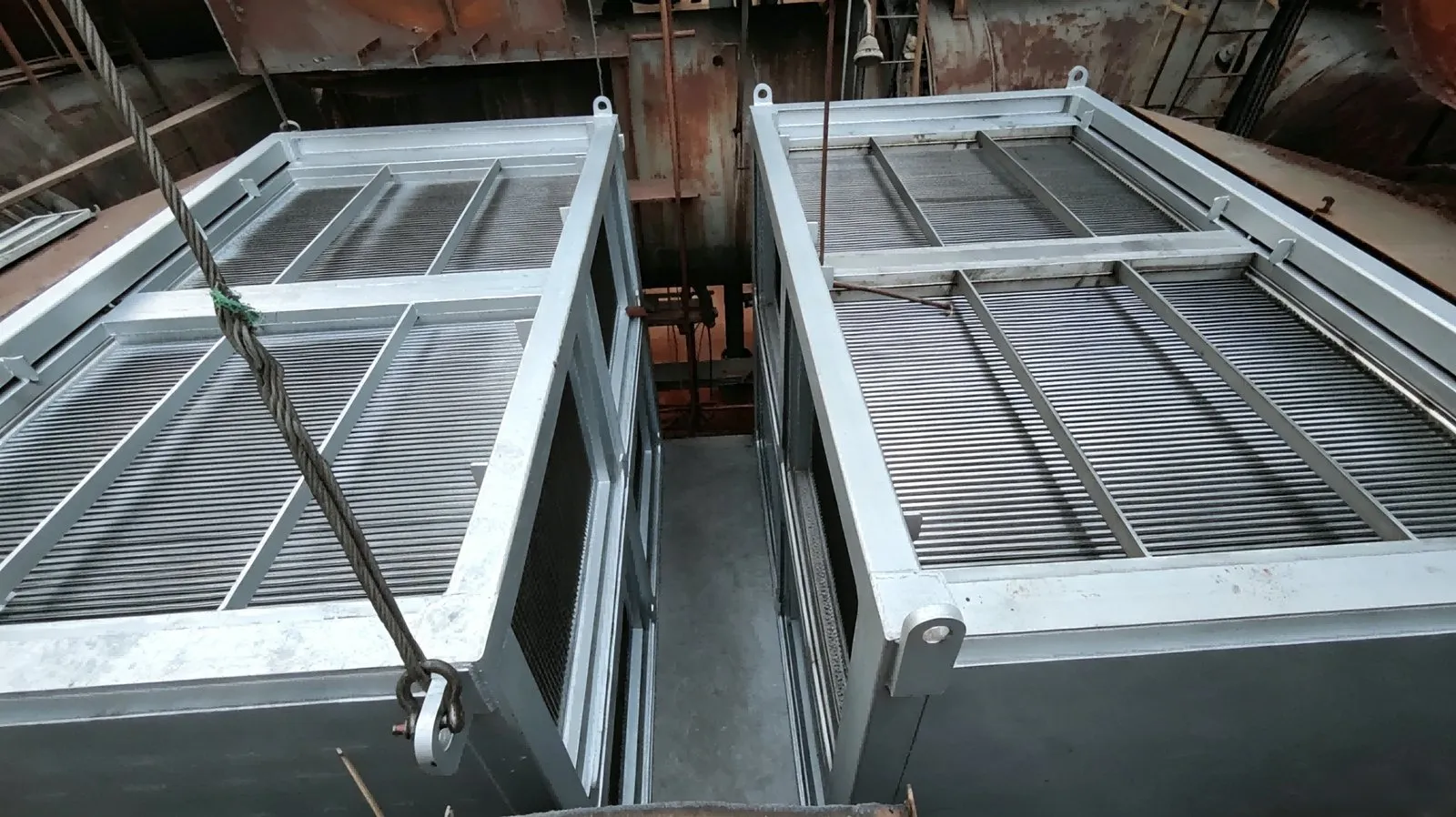
Economizers. Gas-to-water heat exchangers, usually with finned tubes, placed in the flue duct to heat boiler feedwater or a water loop. DOE describes boilers above 100 boiler horsepower, operating above 75 psig and heavily loaded all year as excellent candidates for an economizer retrofit.
Condensing economizers. These cool natural gas flue gas below its dew point, which the DOE puts at about 135 °F (about 57 °C), and recover the latent heat of the water vapour as well. According to the DOE, latent heat is about 9% of the fuel energy of natural gas, and boilers with feedwater and condensing economizers can reach 92–95% efficiency. Indirect units, built from tubular heat exchangers, can heat water to about 200 °F (93 °C) and cool the gas to as low as 75 °F (24 °C). Direct contact units spray water into the gas and are limited to water temperatures of about 110–140 °F (43–60 °C). Either way, the condensate is acidic and must be neutralised before it is discharged or reused.
Welded plate heat exchangers for waste heat. For hot wastewater, evaporator vapours and flue gas from various fuels, all-welded plate designs avoid gaskets and are easier to clean than tubes. THT Juyuan's special heat exchanger for waste heat recovery is an example.
Water-to-water heat exchangers in the intermediate loop. Where an economizer heats a water loop, a compact water-to-water unit delivers the heat to its users. At Huaneng Changchun, Accessen's AWPS plate-and-shell heat exchangers do this job.
4. Plan for Dust and Fouling
Dust is another common reason why heat recovery units fail. Ask for:
- Channels wide enough for the dust. Narrow, tightly spaced channels clog. Give the dust load and particle size.
- Smooth surfaces for sticky dust. At Solbar Ningbo, Accessen used mirror-polished food-grade plates so that dryer exhaust carried protein dust out of the unit instead of leaving it on the plates.
- No gaskets in hot, dusty gas. Gaskets age quickly in warm exhaust; welded designs avoid the problem.
- A cleaning method designed in. Soot blowers, water washing or online cleaning, with access, drains and wash water handling.
- Pressure drop monitoring. A steady rise in gas-side pressure drop shows buildup before heat recovery falls off. Record inlet and outlet temperatures and the pressure drop from the first day.
5. Pressure Drop and Fans
Every heat recovery unit adds resistance to the gas path, and the fan has to overcome it. In a retrofit, check whether the existing induced draught or exhaust fan has the margin, or include a fan upgrade in the project. Give suppliers the allowable gas-side pressure drop. Without it, they will optimize for heat transfer and the fan may not cope.
6. Part Load and Seasons
Heat recovery that works at full load can cause trouble at low load: gas flows drop, cold-end temperatures fall and condensation starts. Seasonal changes in demand matter too. At Huaneng Changchun, the recovered heat goes to feedwater in summer and to the heating network in winter. Tell suppliers the full operating range, not just the design point, and ask how the design protects the cold end at minimum load.
7. What to Put in Your RFQ
| Item | What to give |
|---|---|
| Gas side | Flow, inlet temperature, composition (O₂, H₂O, SO₂/SO₃, HCl), fuel type and sulphur content |
| Dust | Load (mg/Nm³), particle size, stickiness, whether it is food-related or abrasive |
| Heat sink | Fluid, flow, inlet and required outlet temperature, design pressure |
| Limits | Minimum allowed gas outlet or wall temperature, allowable gas-side pressure drop |
| Operating range | Minimum and maximum load, seasonal changes, start-up and shutdown |
| Space | Duct dimensions, available footprint and weight limits |
| Cleaning | Preferred cleaning method and available utilities |
| Materials | Required or excluded materials, food-contact requirements |
The RFQ checklist lists the general data for any heat exchanger quote. Send flue gas and exhaust heat recovery enquiries through the RFQ form and we will match them with Chinese manufacturers that build air preheaters, economizers and welded plate heat exchangers.
What This Means for Buyers
Successful flue gas and exhaust heat recovery depends less on the heat transfer coefficient than on matching the equipment to the gas. Decide where the heat will go, find out what will condense and at what temperature, plan for dust and cleaning, and leave the fan enough margin. Give suppliers the gas analysis and the full operating range, and ask each of them how their design protects the cold end. That is where most projects succeed or fail.
Sources and Related Pages
- U.S. Department of Energy, Steam Tip Sheet #3, Use Feedwater Economizers for Waste Heat Recovery: https://www.energy.gov/sites/prod/files/2014/05/f16/steam3_recovery.pdf
- U.S. Department of Energy, Steam Tip Sheet #26A, Consider Installing a Condensing Economizer: https://www1.eere.energy.gov/manufacturing/tech_assistance/pdfs/steam26a_condensing.pdf
- U.S. Department of Energy, Steam Tip Sheet #26B, Considerations When Selecting a Condensing Economizer: https://www.energy.gov/sites/prod/files/2014/05/f16/steam26b_condensing.pdf
- SHPHE plate air preheater on HeatEx Direct: https://heatexdirect.com/products/shanghai-heat-transfer-equipment-co-ltd/plate-air-preheater
- THT Juyuan special heat exchanger for waste heat recovery on HeatEx Direct: https://heatexdirect.com/products/siping-juyuan-hanyang-plate-heat-exchanger-co-ltd/waste-heat-recovery-special-heat-exchanger