
HVAC Heat Exchanger Supplier Audit Checklist: Plate Heat Exchangers, Coils, Units and Maintenance Data
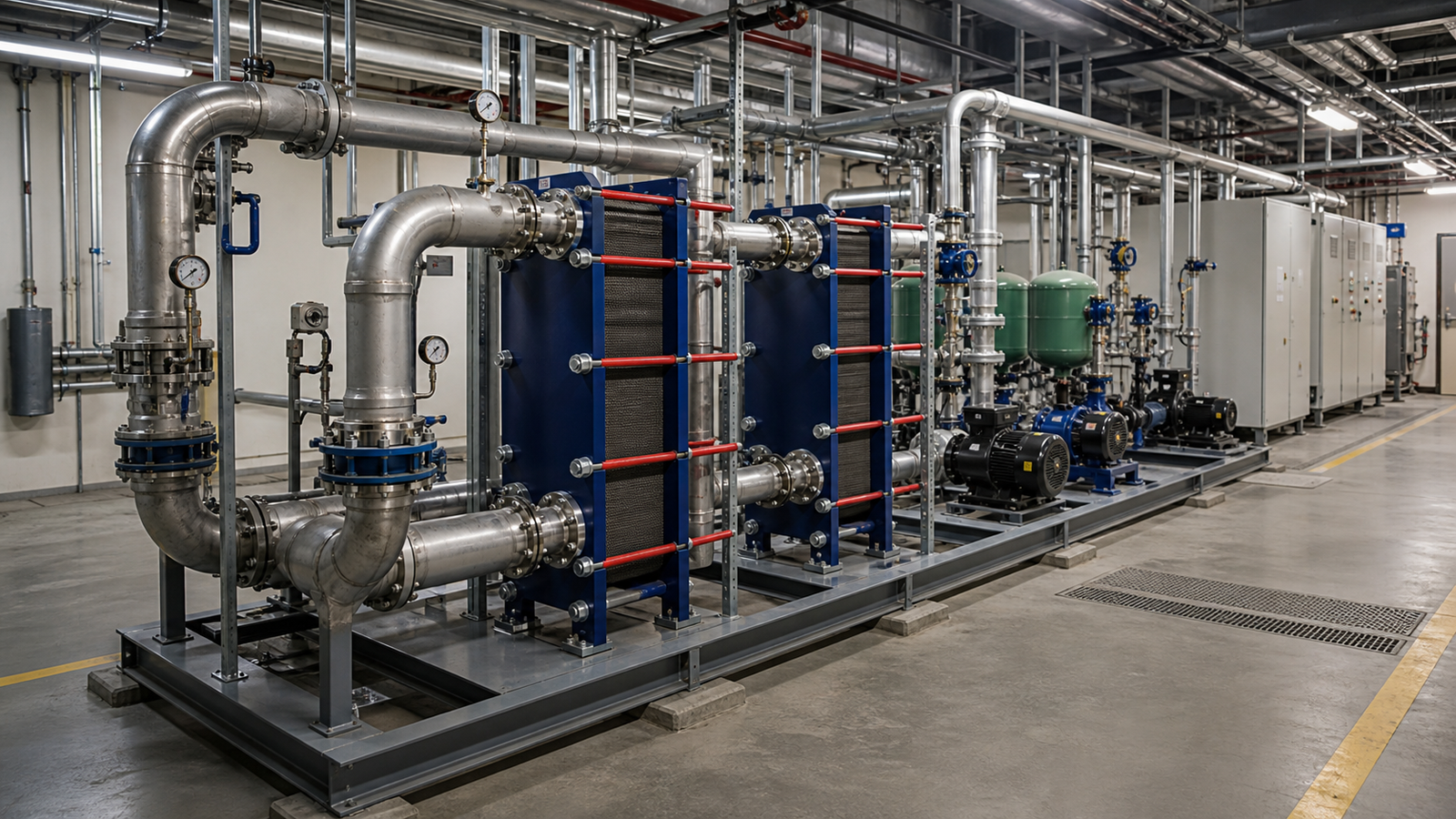
Procuring heat exchangers for HVAC projects may seem simpler than for petrochemical projects, but there are many factors that really affect operational performance: pressure drop, fouling, water treatment, pump power, temperature differential, control valves, maintenance space, AHRI-related performance standards, and system integration. If the purchaser only compares quotations based on heat exchange area or caliber, it is easy to ignore operating costs and maintenance risks.
You can refer to it on the site Detachable plate heat exchanger, Plate heat exchange unit, Heat exchange unit, High-efficiency plate heat exchanger AQ/AA and AIR heat exchanger. These products cover water-to-water heat exchange, station units, air conditioning systems and air-side heat exchange.
1. HVAC projects must first define system boundaries
The purchaser can specify whether the heat exchanger is for district heating, cooling stations, heat pumps, domestic hot water, plate exchange units, air conditioning coils or industrial HVAC. Different systems have different data priorities. For district heating, look at primary and secondary side temperature, pressure drop and control; for cold stations, look at chilled water, cooling water, water quality and dirt; for heat pump systems, look at refrigerant side, glycol, antifreeze and partial load; for air coils, look at air volume, wind resistance, condensation and filtration.
2. The significance of AHRI and project performance requirements
AHRI maintains a number of HVACR and hot water industry performance rating standards that help manufacturers, laboratories, regulatory and certification agencies objectively evaluate products. Purchasers may not necessarily require AHRI certification for every project, but if project documents, the owner, or local regulations require performance ratings, it is recommended that this be stated in the inquiry.
| Project type | May concern |
|---|---|
| Commercial HVAC | AHRI, pressure drop, maintenance space |
| District heating | Heat exchange units, control valves, pumps, heat meters |
| Cold Station | Cooling Water Quality, Dirt, Filtration and Cleaning |
| Heat Pumps | Freeze-proof, Refrigerant Compatible, Part Load |
| Air coil | Air volume, wind resistance, fin cleaning and condensation |
3. Water quality and dirt are the key to long-term costs
DOE information on cooling tower side filtration points out that dirt and scaling can form an insulating film on the heat exchange surface and increase the energy consumption required by the chiller to remove heat; side filtration can reduce suspended solids and microbial-related problems, but it does not replace chemical water treatment. This information is critical when purchasing HVAC heat exchangers: Even the best heat exchanger will degrade if water quality management is poor.
The purchaser can explain to the supplier the water quality, hardness, chloride ions, whether the cooling tower is open, whether there is filtration, whether ethylene glycol is used, antifreeze concentration, cleaning methods and expected maintenance intervals. For plate heat exchangers, it can be stated whether opening the plates for cleaning is allowed; for brazing or welding equipment, it can be stated whether chemical cleaning is allowed.
4. Pressure drop and control should be considered together with the system
In HVAC systems, heat exchanger pressure drop affects pump selection, valve authority, system balance, and operating energy consumption. The supplier's quotation should give the pressure drop on both sides, rather than just the area and diameter. For heat exchange units, attention should also be paid to circulation pumps, control valves, temperature control strategies, bypasses, instruments and electrical control cabinets. If the purchaser only purchases bare boards, the subsequent system integration responsibilities must be clear; if the purchaser purchases a complete unit, the control logic and after-sales support must be confirmed.
5. Quotation content suggested by the supplier
HVAC heat exchanger quotations should include heat load, primary and secondary side parameters, materials, design pressure, pressure drop, connections, external dimensions, maintenance space, control range, recommended water treatment, insulation, anti-freeze measures, spare parts and delivery documents. For air coils, air volume, wind resistance, fin spacing, drainage and cleaning methods should also be included.
6. Procurement Conclusion
The value of an HVAC heat exchanger supplier is not just the price of the unit itself, but also system understanding, pressure drop control, water quality advice, ease of maintenance, and documentation clarity. Purchasers can first compare plate, unit and air-side products in Product Catalog, and then submit project data through Inquiry Form, allowing suppliers to provide feedback on solutions based on the same boundary.
8. The focus of HVAC projects is stable operation and maintenance
HVAC heat exchangers are generally not as high-risk as petrochemical equipment, but they are sensitive to operational stability, energy consumption, maintenance and lead times. The needs of hotels, commercial complexes, hospitals, data centers, district heating or industrial plants are not all the same. The purchaser can specify the system type, such as chilled water, hot water, steam heat exchange, heat pump, water-to-water heat exchange, plate unit or old equipment replacement; also indicate the operating season, peak load, part load, cleaning conditions and whether backup capacity is required.
For the purchaser, the practical focus is to clearly write down the system boundaries: primary and secondary side media, temperature, flow, pressure, allowable pressure drop, fouling conditions, water quality, control method and installation space. For district heating or hot water systems, water replenishment, water treatment and historical scaling will also be described. For hospitals and data centers, there is also a focus on reliability and maintenance windows.
9. Please inquire separately for plate unit and single heat exchanger.
Some HVAC projects require only a single gasketed plate heat exchanger, while others require complete heat exchange units. A complete unit may include heat exchangers, pumps, valves, instruments, control cabinets, bases, pipelines and insulation, and the quotation range is much larger than that of a single piece of equipment. If buyers compare the two together, the prices will be completely incomparable. There is an entrance for products related to plate heat exchange units on the site. When making an inquiry, you should clarify whether you are purchasing only the heat exchanger body or whether you need a skid/package form.
10. Quotes should focus on operating costs
It’s easy to focus too much on the initial price of equipment when purchasing HVAC, but pressure drop, cleaning frequency, spare parts supply and control strategies can affect long-term costs. If the supplier chooses too high a pressure drop in order to reduce the price, it may lead to an increase in pump energy consumption; if the number of plates is too small, the heat exchange margin and dirt adaptability may be insufficient. The purchaser can ask the supplier to list the heat exchange area, number of plates, pressure drop, design temperature, design pressure, gasket material, plate material and recommended maintenance intervals. This will allow you to see operational risk beyond price.
For early inquiry, you can write the inquiry information as "Please provide an economic solution and a low pressure drop solution that meet the working conditions" and let the supplier give two options. This way you can look at both the budget and the long-term operating differences.
11. Record operational problems when replacing old systems
When replacing old HVAC equipment, it is recommended to judge together with the old nameplate and operating problems. Older equipment may have been undersized to begin with, or performance may have deteriorated due to water quality, cleaning, control or system modifications. The purchaser can record the current problem: whether it is insufficient heat exchange, excessive pressure drop, leakage, scaling, aging gaskets, insufficient floor space, or maintenance difficulties. Different problems correspond to different solution directions. If only the gasket is aging, you may need to purchase spare parts; if there is long-term scaling and the pressure drop is too high, you may need to adjust the plate type, increase filtration, or recalculate the flow rate; if the load increases, you need to reselect the type.
It is best to include photos of the old equipment, nameplates, interface locations, on-site space, operating temperature records and recent maintenance records as attachments to the inquiry. After the supplier sees this information, he can judge whether to replace it according to the original plan, or whether to recommend a larger heat exchange area, a lower pressure drop plan or a complete unit. For commercial projects that operate year-round, it is recommended to inquire about spare parts and shutdown maintenance options as well, as post-delivery maintainability will directly affect operations.
Data sources and site links
- AHRI Standards & Guidelines: https://www.ahrinet.org/standards
- DOE Cooling Tower Side Filtration and Fouling Instructions: https://www.energy.gov/cmei/femp/water-efficient-technology-opportunity-side-stream-filtration-cooling-towers
- HeatEx Direct removable plate heat exchanger: https://heatexdirect.com/products/shanghai-heat-transfer-equipment-co-ltd/gasketed-plate-heat-exchanger
- Heat exchanger unit: https://heatexdirect.com/products/lanzhou-lanshi-heat-exchange-equipment-co-ltd/plate-heat-exchanger-unit
- HeatEx Direct heat exchanger unit products: https://heatexdirect.com/products/siping-viex-heat-exchange-equipment-co-ltd/heat-exchanger-unit
- High efficiency plate heat exchanger AQ/AA: https://heatexdirect.com/products/shanghai-accessen-co-ltd/high-efficiency-plate-heat-exchanger-aq-aa
- HeatEx Direct air heat exchanger: https://heatexdirect.com/products/siping-viex-heat-exchange-equipment-co-ltd/air-heat-exchanger