
Applications of Welded Plate Heat Exchanger Skids in Marine Industry
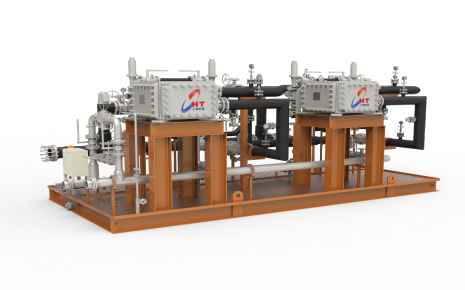
A plate heat exchanger skid is an integrated system featuring a plate heat exchanger as its core component, combined with pumps, valves, instruments, piping, and a PLC control system, all pre-installed on a steel base skid. This modular system can be easily transported, positioned, and connected to other equipment via flanges for immediate use.
By leveraging modular integration, factory pre-assembly, and intelligent management, plate heat exchanger skids solve the traditional challenges of complex installation, difficult maintenance, and poor adaptability. They have become a critical solution in industries such as marine, oil and gas, chemical processing, and renewable energy. Their core value lies in improving construction efficiency and reducing lifecycle costs, especially in harsh environments, rapid deployment scenarios, or space-constrained settings.
Key Applications of Plate Heat Exchanger Skids in Marine Engineering
Seawater Cooling Systems
On large vessels such as cruise ships, LNG carriers, and container ships, engines and machinery generate large amounts of heat. High-temperature freshwater circulates to absorb this heat and then transfers it to low-temperature freshwater via plate heat exchanger skids. The low-temperature water is subsequently cooled by seawater in seawater coolers, maintaining optimal operating temperatures for ship equipment.
Freshwater Supply Systems
On offshore platforms, plate heat exchanger skids play a vital role in seawater desalination. Before reverse osmosis treatment, seawater is heated to the optimal temperature using a heat exchanger skid to improve membrane efficiency. After desalination, freshwater can also be cooled or heated as needed to meet living and production requirements.
HVAC Systems
Plate heat exchanger skids are crucial in marine HVAC systems. They facilitate heat transfer for indoor climate control: heating interior spaces in winter by transferring heat from hot water to air, and cooling spaces in summer by transferring indoor heat to chilled water, ensuring comfortable living and working environments on offshore platforms.
Crude Oil Processing Systems
In offshore oil extraction, crude oil often contains large amounts of water and impurities. Before dewatering and desalting, plate heat exchanger skids preheat the crude oil to improve processing efficiency. After treatment, the oil is cooled by skids for easier storage and transportation.
Hydraulic Systems
Marine engineering relies heavily on hydraulic machinery, including cranes and drilling equipment. During operation, hydraulic oil heats up because of friction. Plate heat exchanger skids dissipate this heat, maintaining stable oil temperature and ensuring hydraulic system reliability and performance.
Marine Aquaculture Facilities
In marine aquaculture, especially for temperature-sensitive species, removable plate heat exchanger skids are used to control water temperature. By exchanging heat between hot or cold water and seawater, indoor aquaculture tanks maintain optimal breeding conditions.
Conclusion
Space and load capacity are major constraints on offshore platforms. Plate heat exchanger skids, with compact, lightweight, and easy-to-maintain design, significantly contribute to rapid development and operational efficiency in marine engineering projects.