
Large Spiral Plate Heat Exchanger Delivered for Mining Service
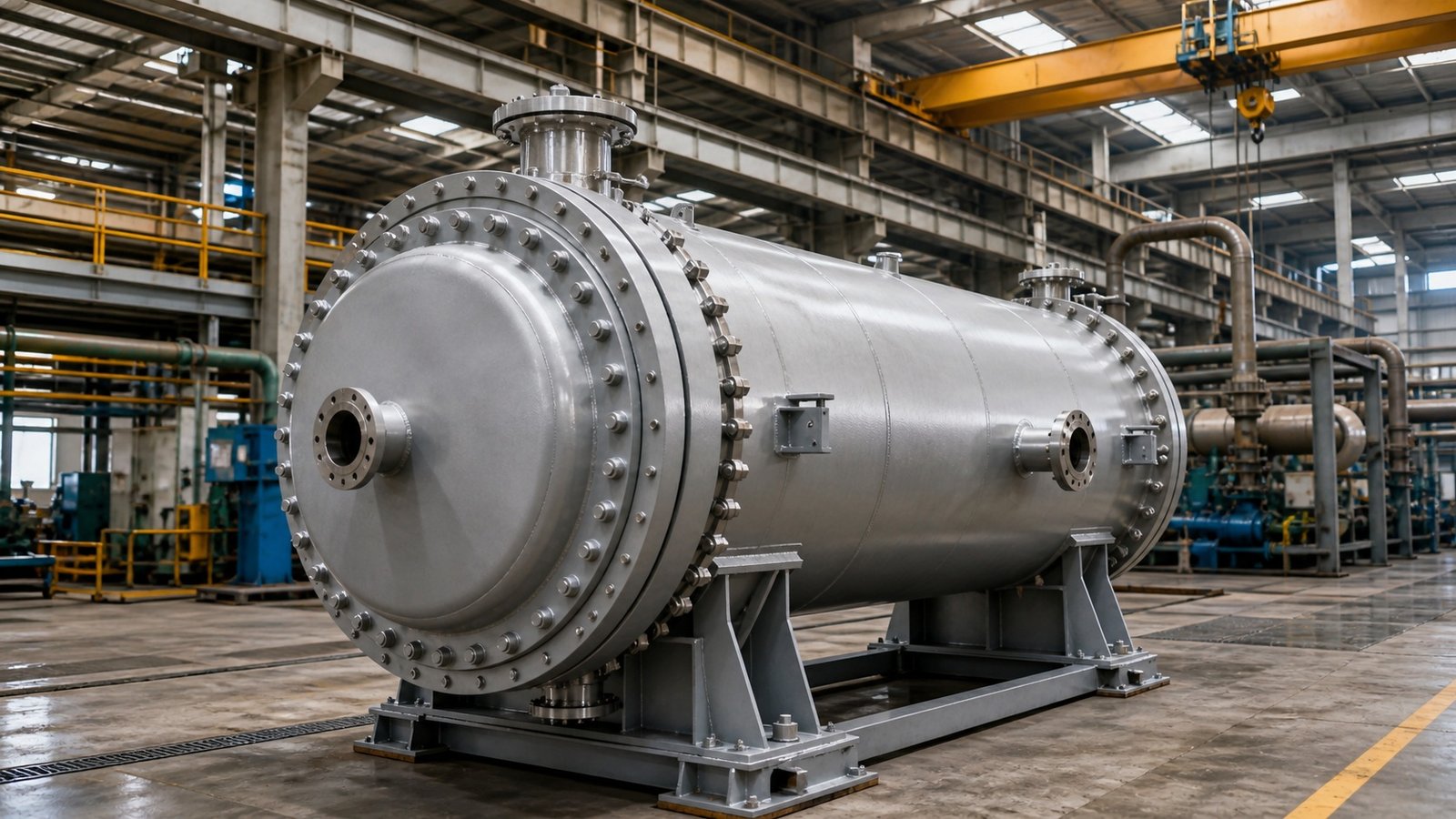
Nexson Group has reported the delivery of an unusually large Type 1 liquid-liquid spiral plate heat exchanger for a mining process application. The equipment is described as nearly 4 meters in diameter and close to 30 tons in weight, with more than 800 m2 of heat transfer area and duplex stainless steel construction.
The reported duty is a combined process step: cooling mineral slurry while heating a solvent stream. That pairing is a natural use case for spiral plate heat exchangers because the design can support efficient liquid-liquid heat recovery while keeping a relatively compact footprint.
Why This Delivery Matters
Spiral plate heat exchangers occupy a specialized position in the heat exchanger market. Their basic structure is simple to describe: two metal sheets are wound into spiral channels, creating two separated flow paths with heat transfer through the plate wall. In practice, making that geometry reliable at large diameter, high area, and industrial pressure is a demanding manufacturing task.
Large mining and hydrometallurgy projects often involve abrasive slurry, suspended solids, and process liquids that can foul conventional equipment. A spiral channel can help because it creates continuous curvature, strong secondary flow, and a single-flow-path behavior that reduces stagnant zones.
Application Signal
The delivery points to three broader trends in industrial heat transfer:
- Slurry services are moving toward more compact heat recovery equipment when cleaning access and fouling resistance can be engineered properly.
- Duplex stainless steel remains a practical material choice for duties where corrosion resistance and mechanical strength are both important.
- Large spiral plate units are increasingly considered for mineral processing and energy-intensive industrial operations, not only for smaller utility duties.
Buyer Takeaway
For buyers evaluating spiral plate technology, headline size is only one part of the story. The more important questions are flow distribution, solids tolerance, pressure drop, cleaning method, weld quality, inspection documentation, and the supplier's ability to prove performance in similar slurry service.
This reported delivery is therefore less about a single record-sized unit and more about the continuing expansion of spiral plate heat exchangers into difficult liquid-liquid process applications.